

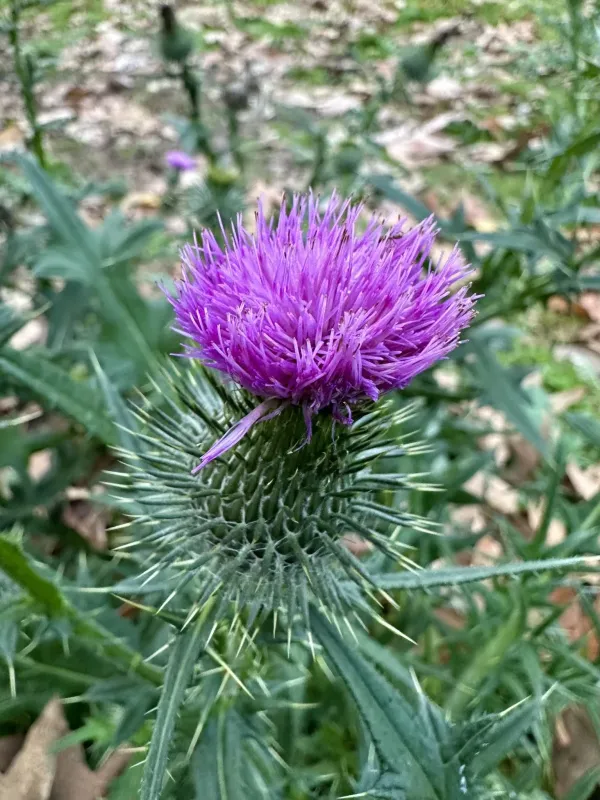
Description
Sowing dates
The spear thistle, known scientifically as Cirsium vulgare, is a biennial plant that reproduces exclusively through seeds. The lifecycle begins with germination, which typically occurs in the spring when soil temperatures reach favorable levels, usually above 10°C.
Seeds are highly opportunistic and can germinate at various depths within the topsoil layer. Once germination is triggered by adequate moisture and light exposure, the plant rapidly develops its signature deep taproot.
During the first year, the plant focuses on establishing a vegetative rosette, which can grow quite large depending on the availability of nutrients. This stage is critical as it stores energy for the second year of growth.
Spring tillage often promotes mass germination of seeds that have been buried in the soil seed bank for years. Consequently, agronomists advise careful management of fallow periods to prevent the establishment of dense thistle patches.
The plant does not require specific sowing techniques; rather, its proliferation is accidental and linked to poor field hygiene or wind dispersal of seeds from adjacent areas.
Growing requirements
Spear thistle belongs to the Asteraceae family and is highly adaptable to a variety of environments. It is commonly found on pastures, roadside verges, and agricultural fields where the soil has been disturbed.
While it thrives on nutrient-rich soils, it can tolerate a wide range of soil textures, including compact clays and light sands. It generally prefers high-light conditions and is inhibited by shade from canopy-closing crops.
Soil pH does not significantly limit its growth, as the plant exhibits extreme plasticity. However, it tends to be more competitive in overgrazed or poorly managed fields where ground cover is sparse.
Water requirements are moderate, but the plant's deep taproot allows it to survive periods of water stress that would kill off competing vegetation. This biological trait gives the spear thistle a significant competitive edge.
The plant's ability to occupy disturbed soil makes it a pioneer species in many habitats, often colonizing fields immediately after harvesting or major land preparation.
Main diseases and pests
As a weed, Cirsium vulgare is often associated with the harboring of various pests. Aphids frequently use the rosette leaves as a breeding ground before migrating to nearby agricultural crops.
The plant acts as a host for several fungal pathogens, including rusts and powdery mildew. These diseases can easily spread from the thistle to adjacent vegetable or cereal crops if the infestation is not managed.
In terms of insect damage, the root system can be attacked by various larvae, which, although natural, rarely kills the plant. Most biocontrol agents have limited success in drastically reducing population density.
The presence of spear thistle increases the overall pathogen load in the field, necessitating higher investment in chemical or biological control agents for the main agricultural crops.
Managing the weed-crop interface is essential to reduce the risk of secondary infections and pest migrations that originate within the thistle patches.
Harvesting
Spear thistle has no agricultural value and is considered a detrimental weed that must be removed from production fields. The harvest strategy is purely focused on eradication and population suppression.
Manual removal of the rosette, specifically severing the taproot below the soil surface, is effective for small infestations. However, it must be performed before the plant initiates its reproductive (flowering) phase.
Chemical control is the most prevalent method in large-scale agriculture. The application of herbicides during the rosette stage, especially in the autumn, is highly recommended to kill the plant and prevent its regrowth.
Mechanical destruction through plowing and cultivation disrupts the root system, preventing the plant from setting seeds. Once the plant has flowered and produced seeds, removal becomes much more difficult due to the risk of wide dispersal.
- Implement systematic deep plowing to uproot plants.
- Utilize systemic herbicides for broadleaf control.
- Maintain buffer zones around fields to prevent seed encroachment.
- Practice timely mowing before seed heads mature.
- Ensure clean machinery to stop the spread of seeds between fields.
Content graph
Connections · Spear thistle
Most often together:
Marketplace