
Brook thistle
Cirsium rivulare (Jacq.) All.
Description
Growing requirements
Brook thistle (Cirsium rivulare) belongs to the Asteraceae family and is a robust perennial herb. Native to Central and Southern Europe, it is naturally found in habitats such as damp meadows, riverbanks, and marshy woodland clearings.
The cultivation of this plant strictly requires moist, nutrient-rich soils. Unlike many other thistle species, it does not tolerate dry conditions well and thrives in heavy, moisture-retentive loams or clay-based soils that mimic its native hydrological conditions.
Climatically, the plant is well-adapted to temperate regions, exhibiting excellent winter hardiness. It performs best when planted in full sun to partial shade, provided that the soil moisture levels are maintained throughout the hot summer months.
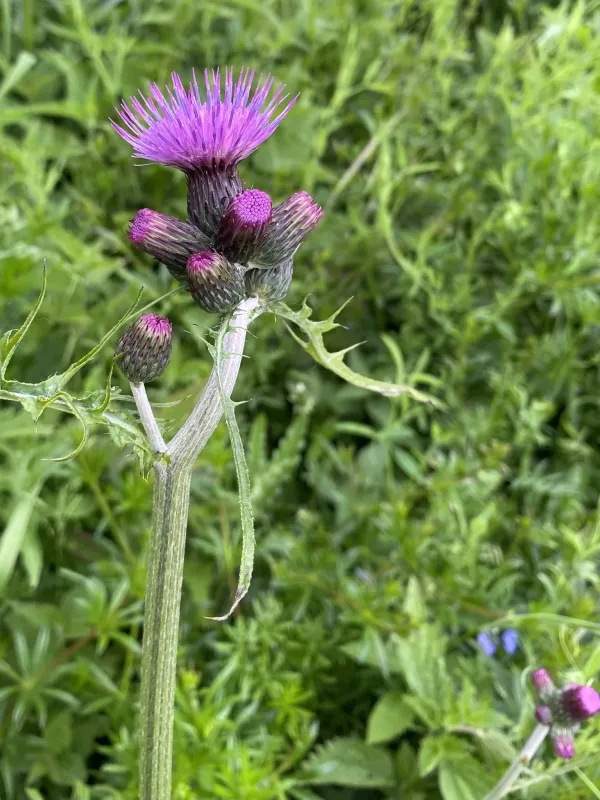
In terms of agricultural and horticultural use, it is primarily grown for its ornamental value. It reaches a height of up to 120 cm, producing distinct, intense purple-pink flower heads that are highly attractive to pollinators, including bees and butterflies.
Maintenance involves mulching to suppress weeds and retain soil moisture. Incorporating well-rotted compost during the planting phase is recommended to ensure the plant receives sufficient nutrients to sustain its vigorous vegetative growth and annual flowering cycles.
Main diseases and pests
The primary pathological threat to the brook thistle is powdery mildew, which often develops in humid, stagnant air conditions. Improving plant spacing is the best cultural practice to mitigate this issue and encourage good airflow.
Pest pressures are generally manageable but can include aphids, which may cluster on tender new stems. If infestations are significant, the application of horticultural soaps or systemic insecticides is advised to prevent stunted growth.
Root rot remains a potential risk if the soil remains waterlogged without any drainage. While the plant loves moisture, it requires the soil to be aerated rather than saturated, as standing water can suffocate the root system.
Rust fungi may occasionally occur on the leaves, presenting as brown or orange spots. Consistent monitoring and the removal of infected foliage are essential to prevent the spread of spores to healthy plant tissues within the cluster.
To ensure long-term health, avoid over-fertilizing with high-nitrogen products, as this encourages soft, rapid growth that is more susceptible to both mechanical damage and pest colonization during the peak summer season.