
Marsh thistle
Cirsium palustre (L.) Scop.
Description
Growing requirements
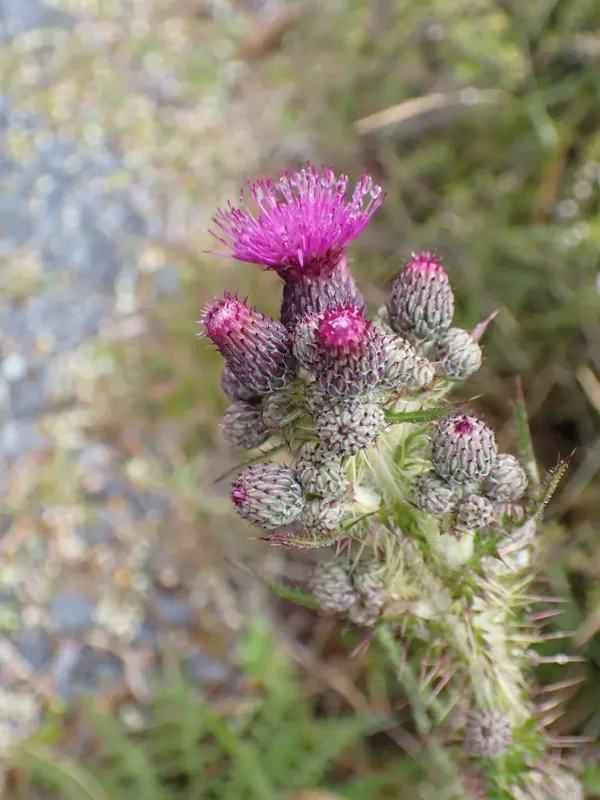
Marsh thistle (Cirsium palustre) is a biennial herbaceous plant from the Asteraceae family. It is distinct due to its preference for damp environments, typically colonizing marshes, wet meadows, and river banks throughout Europe and parts of Asia.
The plant grows as a rosette of leaves in its first year and produces a tall, prickly, purple-flowered stem in its second year. It serves as an important nectar source for pollinators, though it is often considered a nuisance in agricultural settings.
Environmental requirements are strict, as the plant thrives in soil with high water content and organic richness. It acts as a bio-indicator of poor drainage or high water table in fields, which limits the choice of other crops in such areas.
Agronomic management is focused on moisture control. Improving field drainage is the most effective way to inhibit the establishment of Marsh thistle, as it cannot survive in well-drained, dry soil conditions.
Manual or mechanical removal is recommended before seed dispersal. Since the plant is biennial, cutting it consistently before flowering for two consecutive years effectively exhausts its energy reserves and leads to plant death.
Main diseases and pests
Marsh thistle is frequently attacked by various rust fungi, which may occasionally spread to adjacent vegetation. These pathogens are most prevalent during seasons with high humidity and limited airflow.
Insect pests, including aphids and specific species of weevils, often feed on the stems and flower buds. While they cause localized damage, they rarely eliminate the plant population entirely.
Fungal infections such as white rot can compromise the structural integrity of the plant, especially in stagnant water conditions. This poses a risk for surrounding crops if the infection spreads.
Competing with high-value crops, the thistle occupies space and utilizes nutrients and water, reducing overall yields in affected areas. It is particularly problematic in permanent grassland where it inhibits forage intake.
Control strategies involve a combination of drainage improvement and chemical intervention if necessary. Using selective herbicides that target broad-leaved species is effective when applied during the early rosette stage of development.