
Creeping thistle
Cirsium arvense (L.) Scop.
Description
Growing requirements
Creeping thistle (Cirsium arvense) is a perennial flowering plant in the family Asteraceae. Known globally as a troublesome weed, it is characterized by an extensive system of horizontal roots that allow it to colonize agricultural fields aggressively.
Native to Europe, Western Asia, and Northern Africa, it has become naturalized in most temperate regions of the world. It thrives in various environments, showing a remarkable ability to persist in both disturbed areas and productive farmlands.
The plant grows best in moist, fertile soils, though it is quite tolerant of different pH levels and soil types. Its ability to extract moisture and nutrients from deep soil horizons allows it to dominate over native flora and annual crops during dry periods.
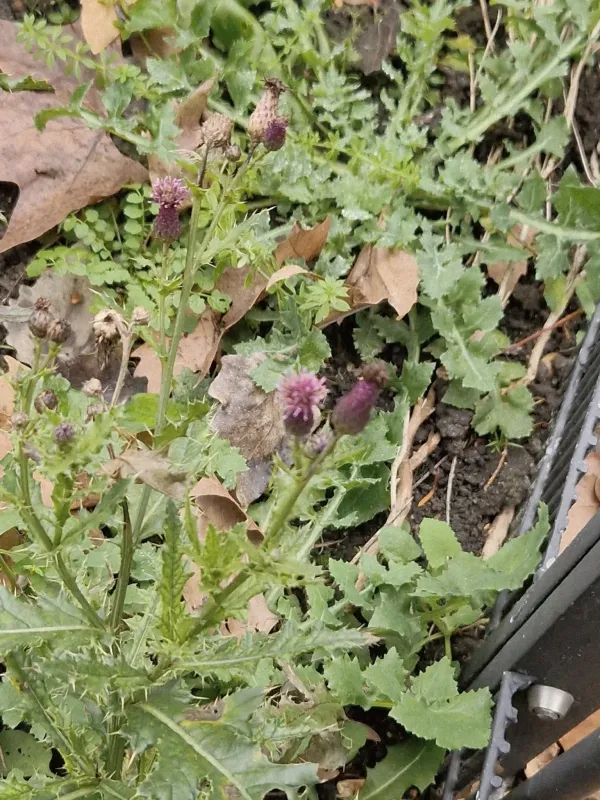
Botanically, it is distinguished by its lobed, spiny-edged leaves and purple flowers. The root system is the defining feature, capable of reaching depths of over two meters, which enables the plant to regenerate from small fragments left behind during tillage.
In agriculture, the creeping thistle is considered a major threat due to its high competitive capacity. It reduces crop yields by interfering with harvesting machinery, increasing competition for resources, and serving as a host for various pathogens that can spread to nearby crops.
Main diseases and pests
The plant is susceptible to several fungal diseases, most notably the rust fungus Puccinia punctiformis. This pathogen can systemically infect the plant, significantly reducing its vigor and reproductive success, which makes it a potential biocontrol agent.
Various insect pests, such as the thistle gall fly, feed on the plant, often causing structural damage to the stems and flower heads. Additionally, aphid infestations and leaf-eating beetles are commonly found on Cirsium arvense populations throughout the growing season.