
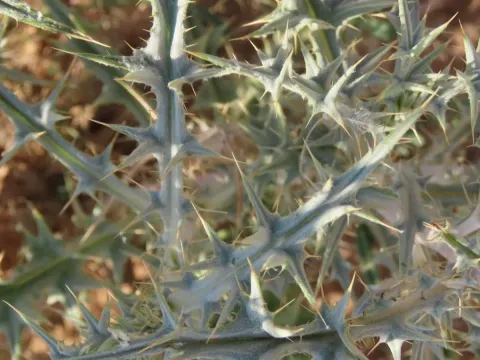
Berkheya annectens
Berkheya annectens
Sowing this crop is recommended at the beginning of the spring season when the soil warms up to temperatures between +15°C and +18°C. Seeds possess high germination energy provided that the substrate remains adequately moist during the first weeks after sowing.
What the section contains
Berkheya annectens
When using the seedling method, seeds are sown in containers 6 to 8 weeks before the intended transplanting into open ground. This allows the plant to strengthen and develop a robust root system, which is resistant to temperature fluctuations.
The planting depth for seeds should be no more than 1 to 2 centimeters, as they require light exposure for successful germination. It is advised to use a loose, well-drained substrate with a neutral pH level.
The sowing density must take into account the mature plant's habit, which can reach significant dimensions. An optimal spacing of about 50-60 centimeters between rows ensures high-quality air circulation.
After the emergence of seedlings, thinning is necessary to keep only the most vigorous specimens. This stage is critical for establishing a productive stand or floral display.
Berkheya annectens is a member of the Asteraceae family and is native to South African regions. The plant is accustomed to bright sunlight and long daylight hours, so cultivation sites should be optimally illuminated.
The crop prefers well-drained, sandy loam or loamy soils with moderate nutrient content. Waterlogging in the root zone is detrimental to this species, as it can trigger the development of root rots.
Regarding temperature, the plant is considered heat-loving, yet it exhibits some tolerance to short-term cold snaps. The optimal temperature for active growth ranges between +20°C and +25°C.
Water supply should be regular but moderate. During drought periods, the plant can survive due to its powerful taproot, though irrigation is necessary to achieve a marketable appearance or high biomass yield.
Fertilizer application should involve balanced mineral complexes with a dominance of potassium and phosphorus, which promote cell wall strengthening and increase resistance to external stressors.
The economic use of the crop is focused primarily on biomass production and applications in landscape design. Biomass yield depends directly on the quality of maintenance and the level of mineral nutrition provided.
Under intensive cultivation technology, one can expect stable vegetative mass growth throughout the entire summer season. The plant recovers quickly after partial pruning or mowing, allowing for multiple harvests.
The biological productivity of the species is determined by its ability to adapt to different soil types given sufficient solar radiation. Cultivation efficiency is enhanced by using mulching to retain soil moisture.
Under industrial conditions for seed production, the yield is limited by the number of inflorescences per plant. Harvesting seeds is carried out after the flower heads have fully ripened and acquired their characteristic brown hue.
The economic feasibility of growing this object is currently viewed as a promising direction for specialized farms dealing with rare species of the Asteraceae family.
The main threats to the plantations are fungal diseases that develop under high humidity and poor air circulation. Specifically, powdery mildew can affect the leaves at the end of the summer season.
Among pests, aphids and spider mites pose the greatest danger as they feed on the cell sap of young shoots. Regular monitoring of the crop condition allows for the timely detection of pest colonies.
Slugs and snails can cause mechanical damage to the leaves, especially during rainy periods. Preventive measures include maintaining cleanliness in the area and weed control around the beds.
Root rot, caused by pathogenic fungi (such as Phytophthora), is a serious problem if irrigation agronomy is neglected. Prevention consists of following crop rotation and improving soil drainage.
The use of broad-spectrum fungicides is justified only during massive outbreaks. For protection, biological control methods that are safe for the environment are preferred.
Harvesting is performed in the morning hours once the dew has evaporated, preventing mold development during subsequent drying or storage. Cut plant parts should be sent for primary processing immediately.
For drying, well-ventilated rooms shielded from direct sunlight are used to preserve the color and useful properties of the raw material. The temperature during the drying process should not exceed +40°C.
Handling inflorescences requires care, as they may be equipped with prickly elements characteristic of many members of the genus Berkheya. Protective gloves are recommended.
The stored biomass is kept in paper or cloth bags that allow for air circulation. It is important to ensure that no condensation forms inside the storage containers.
Plant residues after harvesting should be removed from the site to prevent the accumulation of an infection background in the garden beds for the following season.