
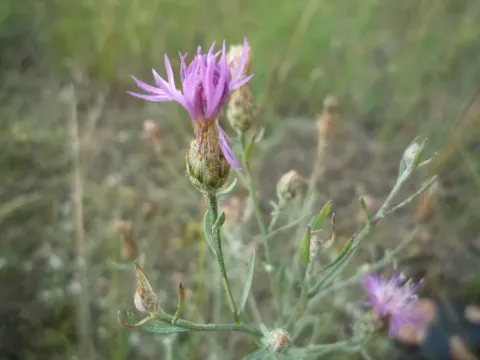
Besser's cornflower
Centaurea besseriana
Besser's cornflower is typically sown in early spring as soon as the soil reaches a temperature of 10°C. Early planting ensures that seeds germinate using the residual winter soil moisture.
What the section contains
Besser's cornflower
Winter sowing is also an option for this hardy plant. Planting seeds in late autumn allows them to germinate as soon as temperatures rise, providing a head start on the growing season.
Seeds should be planted at a shallow depth of approximately 1 to 2 centimeters. Because the seeds are small, covering them too deeply can prevent successful emergence.
Row spacing should be maintained at about 40 to 50 centimeters. This provides sufficient room for mechanical weeding and ensures that each plant has adequate space for air circulation.
Once seedlings have sprouted, thinning is essential to ensure a healthy distance between plants. A final density of about 15-20 centimeters between plants in the row is recommended for optimal yields.
As a member of the Asteraceae family, Besser's cornflower thrives in full sun. It is a highly resilient species that adapts well to various soil types, preferring light, well-drained loamy textures.
The plant demonstrates excellent drought tolerance once established. It requires minimal irrigation, making it suitable for low-input farming systems and areas with limited water resources.
It is winter-hardy and can withstand late spring frosts that might damage more sensitive crops. The growth cycle is relatively rapid, allowing it to reach maturity within the summer months.
Proper field management includes occasional loosening of the soil between rows to prevent compaction. Light fertilization with nitrogen during the initial growth phase can significantly boost biomass.
The crop does not tolerate waterlogging. It is crucial to select sites with good natural drainage or to create raised beds if the soil is prone to saturation during rainy periods.
Powdery mildew is the most common fungal disease affecting this crop. It is usually triggered by high humidity levels and poor ventilation between dense plant groupings.
Rust infections can also occur under stress conditions. Keeping the field clear of debris and ensuring crop rotation are effective ways to mitigate the spread of these pathogens.
Aphids represent the primary insect pest for this species. They cluster on the undersides of leaves and on buds, potentially reducing the overall vigor and yield of the cornflower.
Root rot is a major threat in fields with inadequate drainage. This condition can lead to sudden wilting and is often irreversible once the plant shows visible signs of decay.
Integrated pest management (IPM) practices should be employed to monitor field health. Early detection of pests or pathogens allows for targeted interventions, minimizing the need for broad-spectrum chemicals.