
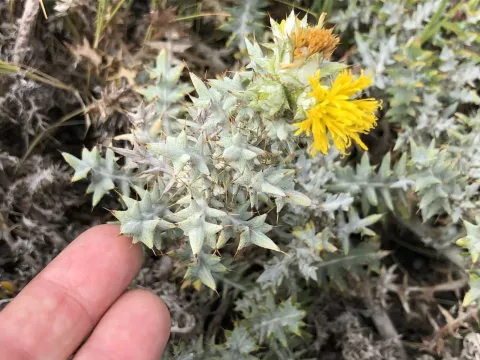
Berkheya rigida
Berkheya rigida
Sowing seeds of Berkheya rigida is best performed in a greenhouse or indoor setting during late winter or early spring. This approach ensures the plant has a sufficient development window, as it typically exhibits a slow growth rate during its initial stages.
What the section contains
Berkheya rigida
For outdoor sowing, it is critical to wait until the soil temperature consistently reaches 15–18 degrees Celsius. The species is highly sensitive to cold soil and early frost, which can easily damage delicate seedlings and stunt their long-term growth.
Seeds should be planted at a shallow depth of approximately 0.5 to 1 centimeter. Utilizing a loose, sandy substrate is recommended to facilitate proper oxygen circulation and to avoid the accumulation of moisture, which can cause seed decay.
When starting in containers, it is advisable to use individual peat pots to minimize root disturbance during transplanting. The plant is notoriously fragile regarding its root system, and improper handling often leads to significant transplant shock.
Spacing is essential for the healthy development of mature specimens. A planting density with a distance of 40 centimeters between plants is recommended to allow for adequate airflow, which is a key factor in preventing fungal issues during the growth cycle.
As a member of the Asteraceae family, Berkheya rigida thrives in full sun exposure. It is an African native that requires intense light levels throughout the day to sustain its physiological functions and promote consistent flower production.
Soil drainage is the most vital requirement for this species. It performs best in poor, sandy, or rocky soils that prevent waterlogging. Heavy, clay-based soils are unsuitable, as they lead to rapid root rot during wetter periods of the year.
The ideal soil pH for this culture is neutral to slightly alkaline. Unlike many other crops, Berkheya does not require heavy fertilization; in fact, over-fertilizing with nitrogen-rich products may negatively impact its natural form and blooming potential.
This plant is exceptionally drought-tolerant once established. It is well-adapted to arid conditions, and irrigation should only be provided when the top layers of the soil have completely dried out, avoiding constant moisture levels around the collar.
Regarding climate, the plant prefers temperate conditions. While it is hardy in its native range, it does not tolerate prolonged freezing temperatures. In regions with harsh winters, it must be protected or moved to a frost-free environment to survive.
Root rot caused by stagnant water is the primary threat to the vitality of Berkheya rigida. This condition is most prevalent in environments with poor drainage or excessive atmospheric humidity, necessitating strict control over irrigation practices.
Aphids are the most common pests that target the terminal buds and developing flowers. While they generally do not kill the plant, their feeding weakens the stems and can lead to the transmission of secondary infections or stunted growth.
Spider mites may become problematic during hot, dry spells, especially when the plant is under water stress. These pests thrive in low humidity and can be identified by the characteristic fine webbing on the undersides of the foliage.
Powdery mildew is a potential threat, especially in poorly ventilated or crowded garden spaces. Maintaining adequate spacing between specimens helps to reduce local humidity levels, making the plant less susceptible to fungal spores.
Slugs and snails are known to feed on young, succulent leaves during damp weather. Implementing a barrier of coarse gravel or utilizing localized organic deterrents can protect the seedlings during the early stages of their development.