
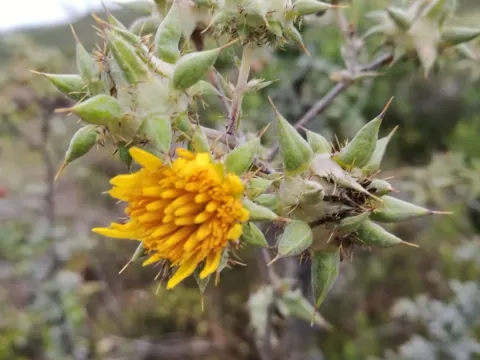
Berkheya heterophylla
Berkheya heterophylla
Berkheya heterophylla belongs to the Asteraceae family and is native to the diverse landscapes of southern Africa. This perennial plant is highly valued in ornamental gardening for its resilience and unique aesthetic, characterized by its distinct foliage and bright, daisy-like flower heads that thrive in harsh conditions.
What the section contains
Berkheya heterophylla
The plant requires full sun exposure to flourish and maintain its compact form. It is particularly well-adapted to well-drained, sandy, or rocky soils, which mimic its natural habitat. Soil compaction must be avoided at all costs, as poor drainage is the primary cause of plant failure during the winter months.
Regarding soil fertility, Berkheya heterophylla prefers nutrient-poor to average soils. High-nitrogen fertilizers should be avoided, as they promote excessive vegetative growth at the expense of floral displays. Neutral to slightly acidic soil conditions are ideal for nutrient uptake and root health.
Watering requirements are moderate. During the establishment phase, consistent moisture is necessary, but once mature, the plant exhibits remarkable drought tolerance. Its deep taproot system allows it to survive prolonged dry spells, making it an excellent choice for water-wise landscaping projects.
In terms of agricultural maintenance, the plant requires very little intervention. Annual clean-up of dead foliage in the early spring prepares the plant for the new growth season. It is a robust species that, once properly sited, remains productive and decorative for many years.
The most significant threat to Berkheya heterophylla is crown rot, triggered by waterlogged soil conditions. If the site does not provide efficient drainage, pathogens like Phytophthora or Pythium can rapidly destroy the root system, particularly during periods of high humidity or excessive rain.
Insect pests such as aphids and spider mites are common secondary threats. They typically infest the undersides of leaves or tender shoot tips. Monitoring for these pests is essential during the active growing season, as severe infestations can weaken the plant and lead to stunted growth.
Powdery mildew can occasionally affect the foliage, especially in areas with stagnant air and poor circulation. To mitigate this, it is recommended to plant specimens with adequate spacing, ensuring that leaves dry quickly after rainfall or heavy dew.
Slugs and snails may present a minor nuisance to young plants. Implementing physical barriers, such as a layer of crushed gravel or specialized organic repellents, can effectively protect the plants during their most vulnerable stage of development in the garden.
General phytosanitary practices, including the removal of infected plant debris and the disinfection of tools, play a critical role in disease management. Maintaining high plant vigor through proper site selection is the best preventative strategy against biotic and abiotic stresses.