
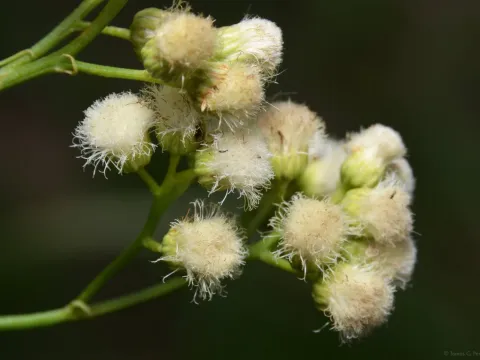
Baccharis glutinosa
Baccharis glutinosa
Baccharis glutinosa, commonly known as sticky baccharis, is a perennial evergreen shrub belonging to the Asteraceae family. Native to the Americas, it is primarily found in riparian habitats, stream banks, and regions with high groundwater levels, showcasing its natural adaptation to moist environments.
What the section contains
Baccharis glutinosa
The botanical profile of the plant is distinguished by its sticky, resinous foliage, which provides protection against water loss and environmental stress. Its structural growth habit is typically upright and dense, making it an excellent candidate for erosion control and natural windbreaks in its native climate zones.
In terms of cultivation requirements, Baccharis glutinosa thrives in full sun exposure and well-drained soil. While it is tolerant of various soil types, including those with varying pH levels, the plant strictly requires adequate soil aeration and warmth to support vigorous growth during the spring and summer seasons.
Managing this crop effectively involves a focus on moisture control. While the plant originates from damp areas, in a garden or nursery setting, one must avoid waterlogged conditions to prevent root suffocation. Regular pruning is also beneficial to maintain a dense form and promote healthier foliage production.
Economically and horticulturally, sticky baccharis is utilized for land restoration and landscape architecture. Its ability to stabilize soil makes it valuable for protecting riverbanks from erosion, while its fast-growing nature allows it to be used as a substantial hedge or privacy screen in warm, frost-free regions.
The primary threats to Baccharis glutinosa include fungal infections, such as root rot and powdery mildew, which typically appear under conditions of high humidity and poor air circulation. Ensuring adequate plant spacing is essential to mitigate these risks effectively.
Pest pressures are generally centered on aphids and spider mites, which can cause significant damage to the new, succulent growth. Monitoring the underside of leaves for these pests and implementing timely treatments will help ensure the longevity and decorative appeal of the shrub.