
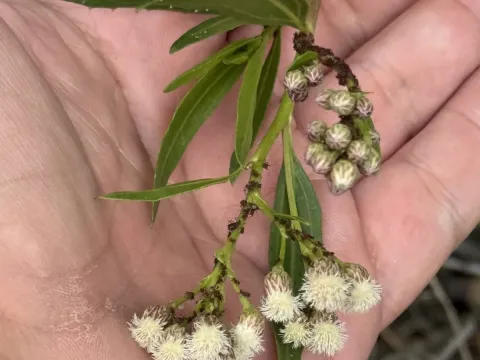
Baccharis lanceolata
Baccharis lanceolata
Baccharis lanceolata is an evergreen shrub belonging to the Asteraceae family. Originating from South America, this plant is valued in agricultural contexts for its structural strength and ability to stabilize diverse types of terrains.
What the section contains
Baccharis lanceolata
The plant thrives in well-lit, sunny locations. It requires soil with good drainage to prevent root rot. While it is highly versatile, it performs best in soils that are not waterlogged, showing a remarkable adaptation to sandy and rocky soils.
Regarding climate, Baccharis lanceolata prefers mild, frost-free environments. It is renowned for its exceptional drought tolerance, which is facilitated by its specialized leaf structure and deep, robust root system, making it an excellent choice for arid climates.
Botanically, the species is recognized by its lance-shaped leaves and numerous small flower heads. These flowers are highly attractive to pollinators, making the shrub a beneficial component of integrated pest management and sustainable farming.
In practice, it is primarily used for erosion control on slopes, as a protective hedge against wind damage for crops, and as a natural element in land reclamation projects to restore soil health.
The main threats to the health of Baccharis lanceolata include fungal diseases often induced by poor air circulation or excessive moisture. Pruning is essential to ensure that the interior of the shrub receives sufficient light and air.
Common pests include aphids and spider mites, which can cause significant damage during hot and dry seasons. It is recommended to perform frequent inspections to detect early signs of infestation and prevent rapid population spread.
Integrated pest management strategies suggest that encouraging natural predators, such as ladybugs, is more effective than the indiscriminate use of broad-spectrum pesticides, which can harm beneficial local pollinators.
Root pathogens may appear if the soil pH is not maintained at appropriate levels or if there is persistent standing water. Improving soil drainage is the most effective preventative measure against such issues.
To keep the shrub vigorous and resistant to disease, it is necessary to remove dead or diseased branches annually. This practice helps maintain the plant's structural integrity and minimizes the risk of opportunistic pathogens.