
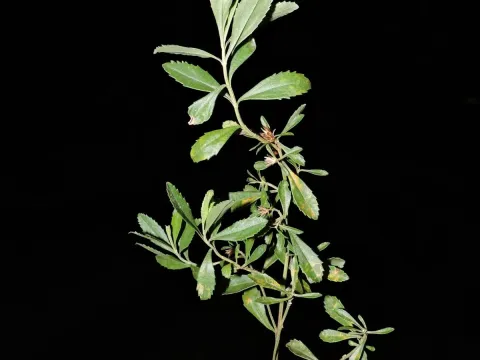
Baccharis microdonta
Baccharis microdonta
Baccharis microdonta is a perennial shrub belonging to the Asteraceae family. Native to the grasslands and savannas of South America, including countries like Brazil and Argentina, this plant has adapted well to varied environmental conditions.
What the section contains
Baccharis microdonta
The plant thrives in full sun exposure, requiring at least six to eight hours of direct light daily for optimal growth. It is well-adapted to subtropical climates with temperature ranges between 20°C and 30°C, showing resilience to moderate temperature fluctuations.
Regarding soil requirements, Baccharis microdonta prefers well-drained, neutral to slightly acidic soils. While it can survive in nutrient-poor soils, improved soil fertility significantly boosts biomass production and plant vigor during the growing season.
Agrotechnical practices focus on maintaining proper soil aeration and preventing waterlogging. Propagation is typically achieved through seeds or stem cuttings, which are then hardened off before being transplanted into the final growing site.
The crop holds value for forage management and as a nectar source for pollinators. Its robust growth habit makes it a candidate for soil stabilization in regions prone to erosion, as it can establish deep root systems in favorable soil conditions.
The primary threats to Baccharis microdonta plantations are fungal pathogens such as powdery mildew. These are often triggered by high humidity levels and poor airflow, which can significantly damage leaf tissues if left unmanaged.
Pest pressures include infestations of aphids and spider mites, which feed on the sap of young stems and leaves. These pests can weaken the plant, stunt its growth, and serve as vectors for secondary bacterial or viral infections.
Effective management includes regular pruning to enhance air circulation through the canopy. By reducing the density of the shrub, growers can create an environment less conducive to the rapid spread of fungal spores and pest colonization.
Root rot is a critical concern, especially in heavy or poorly drained soils. Farmers must ensure proper drainage systems to prevent water accumulation near the crown, which is the most common cause of plant failure in this species.
Integrated pest management (IPM) practices, including the use of targeted biological controls, are recommended for maintaining plantation health. Consistent monitoring and early intervention are essential for preserving the productive life of the crop.