
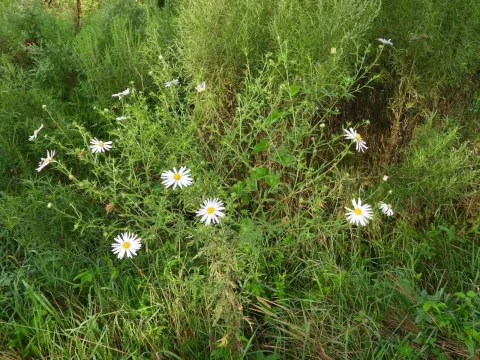
Aster incisus
Aster incisus
Aster incisus, commonly known as cutleaf kalimeris, belongs to the Asteraceae family. It is a perennial herbaceous plant valued for its long blooming period and high ornamental qualities.
What the section contains
Aster incisus
The plant can be propagated by seeds or by dividing established clumps. Sowing seeds in spring or autumn is common practice; seeds require stratification to ensure consistent germination rates.
Division of the rootstock should be performed in early spring or late autumn when the plant is dormant. This ensures the plant establishes itself effectively before the onset of summer heat.
Optimal planting spacing is approximately 40 to 50 centimeters. This distance prevents crowding and allows for proper air circulation, which is vital for preventing moisture-related diseases.
As a robust grower, it thrives in gardens that are well-maintained, needing little more than regular division every few years to keep the clumps vigorous and healthy.
Aster incisus prefers full sun exposure to maintain its compact growth habit and prolific blooming. While it can handle light shade, flowering may be reduced in low-light conditions.
Well-drained soil with a slightly acidic to neutral pH is ideal. The plant is adaptable to various soil textures, including loams, as long as it is not subject to waterlogging.
Watering should be consistent throughout the growing season. While the species shows some drought tolerance once established, supplemental irrigation during dry spells is highly recommended.
It exhibits excellent winter hardiness. In regions with harsh climates, a layer of organic mulch can protect the root system, although the plant is generally hardy enough to withstand freezing.
Fertilizing with balanced NPK formulas in early spring supports the development of lush foliage. A second application before the flowering stage can enhance the intensity of the blooms.
Powdery mildew is the most common fungal issue for Aster incisus. It often appears during periods of high humidity and poor ventilation, showing as a white powdery coating on leaves.
Pests such as aphids and spider mites may occasionally infest the plants. Integrated pest management, including the use of insecticidal soaps, is effective in controlling these outbreaks.
Nematodes represent a more severe threat, potentially causing stunted growth and leaf curling. Avoiding planting in areas where other Asteraceae have recently grown is a key preventative measure.
- Regular inspection for early signs of disease.
- Clearing surrounding weeds to improve air circulation.
- Sanitizing gardening tools after pruning infected plants.
Maintaining plant vigor through proper nutrition and adequate hydration is the best defense against both diseases and environmental stressors.
For ornamental purposes, flowers are harvested during their peak bloom. Cutting the stems early in the day helps maintain their turgidity and extends their longevity in vases.
After the first heavy frost, the stems should be cut back close to the ground. This cleaning process helps the plant prepare for dormancy and prevents the overwintering of pathogens.
Seed collection involves gathering dried flower heads at the end of the season. They should be dried thoroughly in a cool, ventilated place to ensure viability for the next planting season.
In nursery production, plant propagation is largely focused on root division, which is a reliable way to ensure large-scale availability of uniform, high-quality specimens.
The use of Aster incisus in landscapes is primarily decorative, providing structure and seasonal interest in perennial beds, borders, and meadow gardens.