
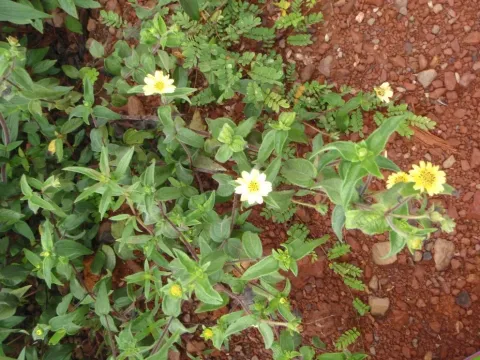
Aspilia
Aspilia
Aspilia is a genus of perennial herbaceous plants and subshrubs belonging to the Asteraceae family. In the wild, these plants primarily grow in the tropical and subtropical regions of Africa and parts of South America.
What the section contains
 Aspilia buphthalmiflora
Aspilia buphthalmiflora
Aspilia buphthalmiflora
 Aspilia bussei
Aspilia bussei
Aspilia bussei
 Aspilia ciliata
Aspilia elegans
Aspilia elegans
Aspilia helianthoides
Aspilia helianthoides
Aspilia ciliata
Aspilia ciliata
Aspilia elegans
Aspilia elegans
Aspilia helianthoides
Aspilia helianthoides
 Aspilia kotschyi
Aspilia kotschyi
Aspilia kotschyi
 Aspilia mortonii
Aspilia multiflora
Aspilia multiflora
Aspilia rudis
Aspilia rudis
Aspilia mortonii
Aspilia mortonii
Aspilia multiflora
Aspilia multiflora
Aspilia rudis
Aspilia rudis
Aspilia
This crop prefers sunny locations with well-drained soils. It shows high adaptability to various soil types, although it performs best in fertile loams with a neutral or slightly acidic pH level.
The temperature regime is a crucial development factor. Aspilia is a heat-loving plant and cannot tolerate freezing temperatures, making industrial cultivation possible only in frost-free climate zones.
The plant exhibits high drought resistance due to its root system characteristics, which makes it a promising crop for cultivation in regions with irregular rainfall patterns.
Under agronomic conditions, the plant requires careful monitoring of planting density, as it tends to spread rapidly, which can make inter-row maintenance more difficult.
The agricultural use of Aspilia is primarily linked to its high biomass, which can be utilized as green fodder for livestock. Some species demonstrate an impressive rate of regrowth after mowing.
Beyond its value as fodder, several Aspilia species are actively studied for their content of bioactive compounds. In African traditional medicine, Aspilia leaves are commonly used for wound healing and treating skin infections.
The plant's biochemical composition includes flavonoids and terpenoids, supporting its potential for use in the pharmaceutical industry and the production of organic supplements.
Yield studies indicate that with proper irrigation and regular nitrogen fertilization, the green mass output of Aspilia can compete with a variety of traditional forage grasses.
The crop's potential is also being explored for breeding purposes to develop new varieties resistant to specific local diseases found in tropical regions.
Major threats to Aspilia plantations include fungal infections that develop under conditions of high humidity and poor air circulation. Foliage damage caused by powdery mildew requires timely fungicide application.
Insect pests, such as aphids and various types of caterpillars, can cause significant damage to the plant's foliage during periods of rapid vegetative growth.
It is essential to maintain field cleanliness, as weeds can suppress young Aspilia seedlings during early stages of development by competing for nutrients and moisture.
In regions with high soil moisture, there is a risk of root rot development, which requires ensuring adequate drainage within the cultivation fields.
Pest monitoring should be conducted on a weekly basis to prevent large-scale infestations that could lead to a decrease in the overall nutritional quality of the harvest.