
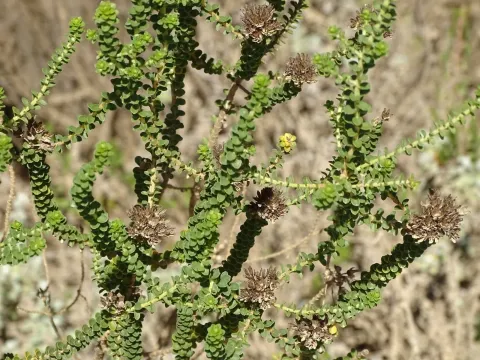
Asaemia
Asaemia
Asaemia is a genus of flowering plants belonging to the Asteraceae family. It is a monotypic genus, most commonly represented by Asaemia axillaris. This plant is native to the arid regions of Southern Africa, characterized by its shrubby growth habit and high tolerance to extreme drought.
What the section contains

Asaemia
To cultivate Asaemia successfully, one must replicate its natural habitat conditions. The soil must be exceptionally well-drained, preferably sandy or stony. Poor drainage is the most significant cause of crop failure, as the root system is highly prone to rot when exposed to excessive moisture.
The climate requirements for Asaemia include intense sunlight and high heat. The plant thrives in semi-desert environments and is capable of surviving significant seasonal fluctuations in temperature without the need for supplemental irrigation once established.
Agricultural management should prioritize minimal soil disturbance and the maintenance of open spaces between plants.
- Ensure proper spacing to allow airflow.
- Avoid heavy fertilization.
- Maintain low irrigation frequency.
- Monitor soil salinity levels.
- Protect from waterlogging.
The industrial use of Asaemia is currently focused on its potential as an aromatic crop. Due to its chemical composition, which includes various terpenes and essential oils, researchers are evaluating its suitability for sustainable production in arid lands that are unsuitable for conventional food crops.
The primary threats to Asaemia under controlled cultivation are fungal pathogens, specifically those that attack the root collar under conditions of high humidity. Preventing stagnant water around the base of the plant is the most effective management strategy.
In terms of pests, the plant is relatively resilient. However, infestations of sap-sucking insects may occur in dense plantings with poor ventilation. Regular scouting and maintaining sufficient plant spacing are standard protocols to minimize the risk of pest outbreaks.