
Aspilia ciliata
Aspilia ciliata
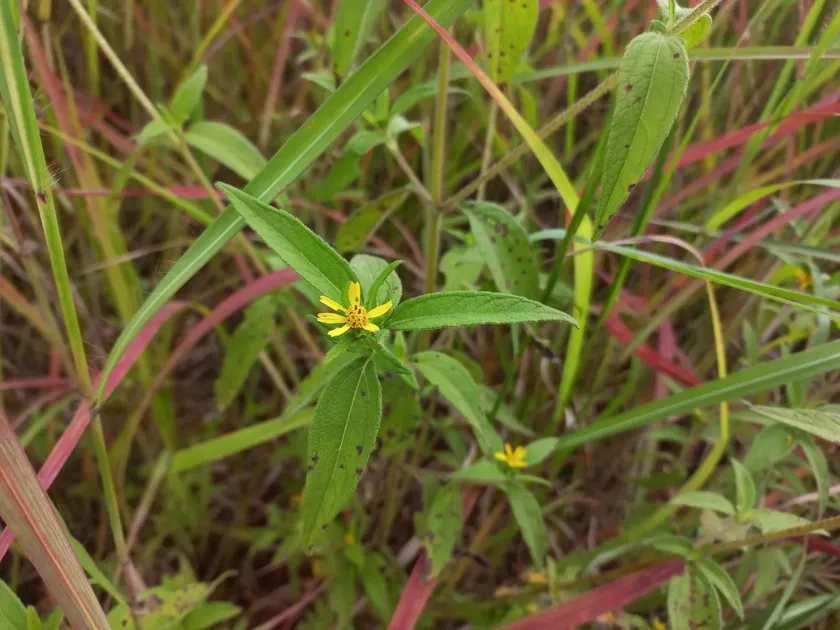
Description
Sowing dates
Aspilia ciliata, a member of the Asteraceae family, is a perennial herbaceous plant or subshrub native to tropical Africa. Sowing is typically scheduled at the beginning of the rainy season when soil temperatures and moisture levels are optimal for germination and rapid initial growth.
The crop is highly adaptable to various soil types, but it thrives best in well-drained loamy soils with a neutral or slightly acidic pH. Selecting a site with full sun exposure is crucial, as the plant is highly photophilic and exhibits reduced vigor in shaded environments.
Seeds should be planted at a shallow depth of 1–2 centimeters to ensure effective soil contact. Sowing density is adjusted according to the intended use: higher densities are prioritized for biomass production, whereas lower densities are used for intercropping or erosion control projects.
The plant features a robust root system that facilitates quick establishment, even under conditions of moderate moisture stress. Early management must include diligent weeding during the first few weeks of vegetation to prevent competition from invasive species that could suppress the young crop.
Agronomists emphasize the importance of using high-quality, calibrated seeds to ensure uniform crop emergence. Aspilia demonstrates excellent regrowth potential after mowing or controlled grazing, making it a reliable choice for sustainable pasture management.
Growing requirements
Aspilia ciliata is perfectly suited for tropical and subtropical climates characterized by seasonal rainfall patterns. It displays remarkable tolerance to the high temperatures typical of equatorial regions, provided that the soil does not suffer from prolonged waterlogging.
While the plant can survive in nutrient-poor soils due to its efficient nutrient uptake and symbiotic interactions, optimal biomass yields are achieved in fertile soils rich in organic matter. Regular soil aeration is beneficial for root development and overall plant health.
Cultivation practices should prioritize soil structure preservation. In cases where soil compaction is observed, light mechanical cultivation between rows is recommended to enhance oxygen penetration and water infiltration during the growing season.
The plant's environmental plasticity allows it to adapt to fluctuating moisture levels throughout the year. Its deep root system enables the plant to access moisture from subsurface layers during the dry season, ensuring survival when other forage species may wither.
While Aspilia is not overly demanding, supplemental nitrogen application during the active vegetative growth phase can significantly boost productivity. Over-fertilization is generally unnecessary and could potentially disturb the natural balance of the soil microbial community.
Yield
The primary agricultural use of Aspilia ciliata is as a green forage source for both small and large ruminants. Its foliage and young shoots are rich in nutrients, making them a highly desirable supplement for livestock rations in rural farming systems.
Yield capacity is highly dependent on harvest frequency and the implementation of sound agrotechnical practices. Under optimal conditions, the crop can provide multiple cuts per season, quickly recovering from harvesting at a height of 10–15 centimeters.
Beyond its forage utility, Aspilia is being investigated for its potential in ethnobotany and as a source of bioactive compounds. The presence of antioxidants and various flavonoids suggests potential value for the pharmaceutical industry, encouraging further phytochemical research.
In conservation agriculture, the plant acts as a vital tool for slope stabilization. The dense root mat effectively anchors the topsoil, preventing water erosion and contributing to the reclamation of degraded or marginal land areas.
Given its perennial nature, the investment in establishing an Aspilia stand is recovered over several years. A well-managed plantation can remain productive for 3 to 5 years, offering consistent economic returns with minimal annual maintenance.
Main diseases and pests
The primary pathological threats to Aspilia ciliata involve fungal infections such as powdery mildew and various leaf spot diseases, particularly in humid or overcrowded conditions. Proper spacing and good field ventilation are essential preventative measures to minimize humidity buildup.
Pest management focuses on controlling sucking insects, such as aphids and thrips, which can stunt plant growth if populations reach high levels. Integrated pest management, including the encouragement of natural predators, is preferred for sustainable production.
Occasional infestations of leaf-eating caterpillars can lead to significant foliage loss. Regular field monitoring is necessary to identify potential outbreaks early and implement targeted control measures before significant economic damage occurs.
Root-knot nematodes can also pose a threat, particularly in sandy soil profiles, by limiting the plant's nutrient uptake capacity. Incorporating Aspilia into a diverse crop rotation cycle is an effective strategy to mitigate the build-up of soil-borne pathogens.
Overall, Aspilia ciliata exhibits high natural resistance to common tropical crop diseases. Maintaining optimal growing conditions helps the plant build its own defenses, reducing the reliance on chemical pesticides and promoting an eco-friendly farming environment.
Harvesting
Harvesting for forage should take place just before the onset of massive flowering, as this is when the nutrient concentration in the aerial parts is at its peak. Timing the harvest accurately ensures high palatability and nutritional value for livestock.
Standard harvesting techniques involve cutting the crop at a precise height to encourage branching and the development of dense regrowth for the subsequent cycle. Modern mechanical forage harvesters can be easily adapted for this crop to maximize efficiency.
The harvested green mass can be utilized fresh or processed into hay for storage during dry periods. High-quality hay production requires rapid drying under controlled conditions to preserve the nutritional density and prevent mold development.
For seed production, harvesting should be performed once the flower heads reach full maturity. Careful timing is critical because the seeds tend to disperse naturally once the heads dry out, potentially leading to significant yield losses if delayed.
Consistent and disciplined harvesting practices are the key to long-term stand productivity. By preventing the stalks from becoming overly woody, farmers ensure that the biomass produced remains of high quality and suitable for intensive animal feeding programs.