
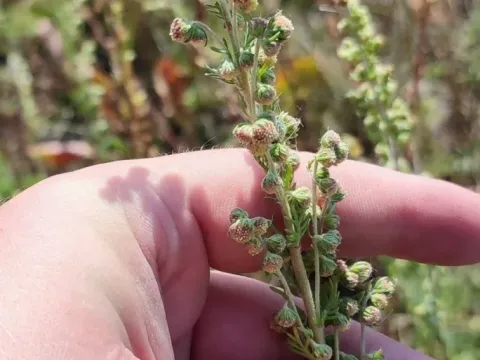
Rock wormwood
Artemisia rupestris
Sowing of rock wormwood is primarily carried out by seeds in the spring, once the soil warms up to 10–12°C. Seeds require stratification to enhance germination, as the plant is adapted to harsh alpine conditions.
What the section contains
Rock wormwood
For commercial cultivation, seeds are sown in rows with spacing of up to 45–60 centimeters, which simplifies subsequent plant maintenance. Shallow soil coverage ensures optimal oxygen access for germination.
Seedlings typically emerge within 2–3 weeks after sowing, provided there is adequate soil moisture. During the initial development stages, the culture grows slowly and requires timely weed control.
Select open, sunny areas protected from water stagnation for seeding. The optimal seeding rate is approximately 1–2 kilograms per hectare, assuming high-quality seed material.
Vegetative propagation via root division of mature specimens is also possible, allowing for faster biomass production. This method is highly effective for smaller plantations and collector nurseries.
Rock wormwood belongs to the Asteraceae family and is a perennial herbaceous plant with a robust root system. It is adapted to rocky substrates, therefore requiring well-drained soils.
The plant prefers moderately moist areas but strictly does not tolerate waterlogging or high groundwater levels. Water stagnation leads to root neck rot and plant mortality.
High levels of solar radiation are essential for the normal development of wormwood. In the shade, the plant loses its aesthetic appeal and reduces the concentration of accumulated biologically active substances.
The crop possesses high winter hardiness and drought tolerance, enabling cultivation in regions with extreme continental climates. It successfully withstands significant diurnal temperature fluctuations.
Light loams or sandy soils with a neutral to slightly alkaline pH are best for cultivation. Excess nitrogen negatively impacts the quality of essential oils produced by the plant.
The green mass yield of rock wormwood depends on growing conditions and the age of the plantation. Yield is minimal in the first year as the plant focuses on establishing its root system.
In the second year and beyond, with proper care, the plantation reaches peak productivity. Biomass harvesting is performed during the mass flowering phase when the concentration of useful substances is at its maximum.
Average productivity ranges from 3 to 6 tons of dry mass per hectare, depending on planting density. It is important to rejuvenate bushes every 4–5 years to maintain consistent output.
The yield of essential oil is a key economic indicator. To maximize raw material output, irrigation during budding periods is practiced during drought while avoiding over-saturation.
Storage of raw material requires good ventilation and protection from direct sunlight to prevent the evaporation of volatile compounds. Proper drying maintains the product's quality and aesthetic appeal.
The main pests for rock wormwood are specialized species of aphids and weevils. These can damage both the leaf blades and reproductive organs, significantly reducing total yields.
Among fungal diseases, various types of powdery mildew and leaf spot are the most dangerous. They develop primarily under poor humidity control and inadequate aeration of the plot.
Disease prevention involves strict adherence to agricultural practices: avoiding overcrowding of plantings and selecting appropriate field sites. Regular soil loosening prevents root rot development.
The use of chemical protection should be limited due to the plant's use in pharmacology. Preference is given to biological control methods or plant-based extracts.
Monitoring for pests is conducted during the spring-summer season. Timely removal of affected bushes helps stop the spread of infection throughout the plantation area.
Harvesting is performed during the full flowering phase when inflorescences are most saturated with biologically active components. This period usually occurs in the second half of summer.
Raw material collection is carried out mechanically or manually by mowing the tops of the plants at a height of 10–15 centimeters. This practice promotes better bush growth the following year.
Mown biomass must be transported to the drying area as quickly as possible. Prolonged exposure of cut grass in the field leads to the loss of essential oils and discoloration.
Drying is conducted in shaded areas under shelters with good ventilation. It is critical to avoid overheating the raw material, as this negatively impacts the final chemical composition.
After drying, the product undergoes sorting and purification from impurities. Properly harvested wormwood meets high quality standards and retains its beneficial properties.