
Roan goldenrod
Solidago roanensis
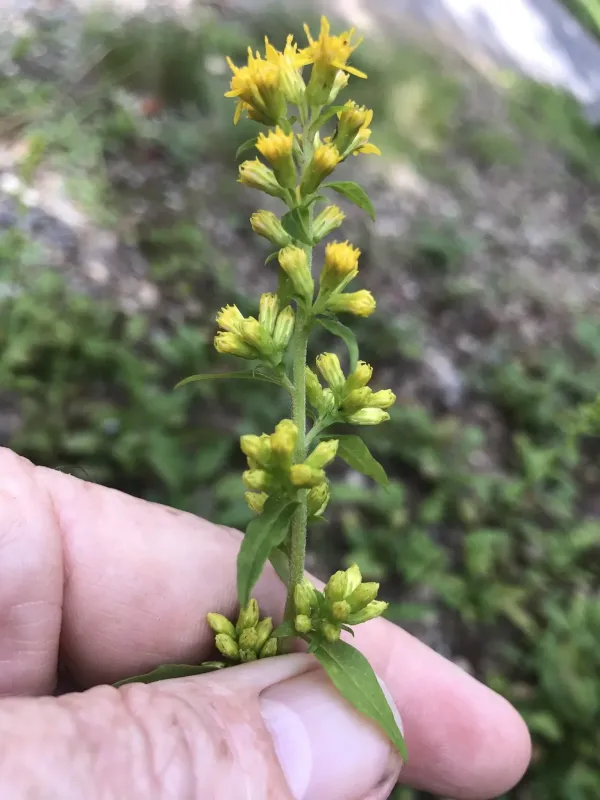
Description
Growing requirements
Roan goldenrod (Solidago roanensis) is a herbaceous perennial plant belonging to the Asteraceae family. It is native to the Appalachian Mountains in the United States, typically found in rocky, well-draining soils within open mountain slopes or forest edges.
Botanically, the plant is characterized by its stiff, erect stems and lanceolate foliage. Its most notable feature is the vibrant yellow, plume-like inflorescence that blooms late in the season, providing essential late-summer color when many other garden plants have finished their cycle.
The cultivation of Solidago roanensis requires sites with full sun exposure to ensure robust growth and prevent lodging. While it is adaptable to various soil types, a loose, slightly acidic to neutral substrate with excellent drainage is preferred to prevent root rot during dormant months.
Agrotechnical maintenance is relatively low. The plants benefit from mulching in the early spring to conserve soil moisture and prevent weed competition. During the growing season, if the plant becomes too tall or top-heavy, a light pruning can encourage denser branching and more stable stems.
In terms of хозяйственное usage, Roan goldenrod is highly valued as an ornamental in naturalistic plantings and pollinator gardens. Because of its high nectar production, it serves as a critical food source for pollinators like bees and butterflies, which are preparing for the upcoming winter.
Main diseases and pests
Common plant health issues include powdery mildew, which often appears in stagnant, humid environments. To minimize the risk of infection, it is important to provide sufficient spacing between plants, allowing for consistent airflow throughout the growing canopy.
Insects like aphids or lace bugs can occasionally infest the foliage, particularly during dry spells. If infestations reach critical levels, horticultural soaps or neem oil applications are generally sufficient to manage populations without damaging the plant's structural integrity.