
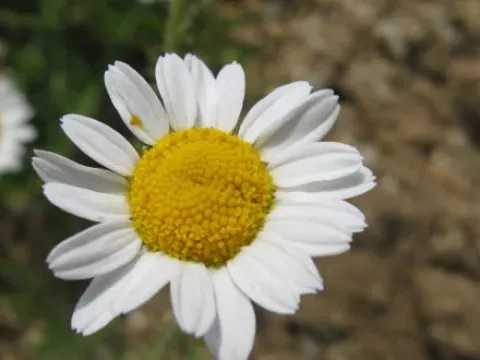
Roman chamomile
Chamaemelum
Sowing Roman chamomile (Chamaemelum nobile) is primarily carried out in spring when soil temperatures reach 10–12°C. Late autumn sowing is also possible in regions with mild winters, allowing seeds to undergo natural stratification.
What the section contains

Roman chamomile
The seeds are extremely small, requiring a shallow sowing depth of no more than 0.5–1 cm. After sowing, the soil should be lightly rolled to ensure good seed-to-soil contact for uniform germination.
In commercial production, row seeding with 45–60 cm between rows is standard. This provides sufficient space for rosette development and facilitates maintenance operations.
Seedlings emerge within 14–20 days under adequate moisture conditions. During the early growth stages, the crop grows slowly, making timely weed control essential for successful establishment.
An optimal plant density is approximately 300,000 to 400,000 plants per hectare to maximize the production of both vegetative and floral biomass.
Roman chamomile thrives in open, sunny locations. It is highly light-demanding, as shading significantly reduces the essential oil content in the flower heads.
The crop performs best in light, sandy, or loamy soils with a neutral or slightly acidic pH. Proper drainage is a crucial requirement, as the plant is sensitive to waterlogging.
While the plant exhibits moderate drought tolerance, it requires regular irrigation during the active floral development stage to prevent premature wilting of the heads.
The optimal temperature range for vegetative growth is 18–25°C. Roman chamomile can withstand brief frosts, but prolonged exposure to extreme cold negatively impacts yields.
Effective management involves enriching the soil with organic matter prior to planting, followed by nitrogen-phosphorus fertilization to stimulate prolific flowering.
Yields of Roman chamomile depend heavily on management practices and climatic conditions. On average, producers can expect between 5 and 10 centners of dried flower heads per hectare.
Peak production is usually observed in the second year after planting when the clumps become well-established and produce the highest volume of flowering stems.
During commercial processing, the focus is not only on dry weight but also on essential oil yield, which can vary significantly depending on the time of day during harvest.
Regular cultivation between rows is vital to reduce weed competition and improve root zone aeration, directly contributing to higher overall plant vigor.
The economic value is primarily driven by high market demand for Roman chamomile essential oil within the fragrance, cosmetic, and pharmaceutical industries.
Powdery mildew represents the primary threat to chamomile crops, often triggered by high humidity levels and inadequate airflow between plants.
Pests such as aphids and spider mites can cause significant damage in dry conditions by sap-sucking on young shoots, which degrades the quality of the harvested raw material.
Root rots are frequent issues in fields with poor drainage, where infection spreads rapidly across the plantation if preventive measures are ignored.
Prophylactic treatments with biofungicides or copper-based sprays are recommended during the active growth phase to manage fungal pathogens.
Integrated pest management, including crop rotation and the prompt removal of plant residues after harvest, is highly recommended to keep pest populations in check.
Harvesting is performed during peak flowering, precisely when the ray florets are horizontal and the tubular disc florets are not yet fully open.
Mechanical harvesting is common, requiring specialized comb-style headers that strip the flower heads while leaving the bulk of the stems in the field.
Collected material must be dried quickly to prevent overheating and the degradation of volatile essential oils. Drying temperatures should be maintained between 40–45°C.
Post-drying, the raw material undergoes a cleaning process to remove dust, debris, and impurities before packaging or extraction.
Strict adherence to the harvesting window is critical, as over-matured plants show a marked decline in biological activity and aromatic quality.