
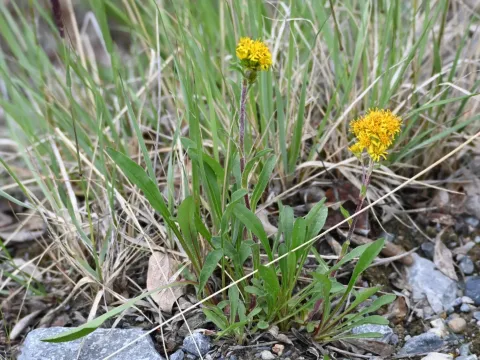
Rocky Mountain goldenrod
Solidago multiradiata
The Rocky Mountain goldenrod (Solidago multiradiata) is a robust perennial herb belonging to the Asteraceae family. Native to the mountainous and arctic regions of North America, this species has evolved to thrive in challenging environments characterized by short growing seasons and thin, stony soils.
What the section contains
Rocky Mountain goldenrod
Botanically, the plant is recognized by its vibrant yellow inflorescences and specialized root systems that anchor it firmly in alpine meadows. It is highly valued for its ability to persist in harsh landscapes, making it a reliable choice for reclamation and ecological restoration projects in cooler climates.
Optimal growth conditions require full sun exposure and well-draining, slightly acidic soil. While the species is remarkably drought-tolerant once established, providing consistent moisture during the early seedling stage significantly improves biomass accumulation and root system density.
Climate requirements for this crop involve a cold stratification period for seeds, which is essential for uniform germination. The plant exhibits superior cold hardiness and does not require extensive winter protection, as it is physiologically adapted to withstand freezing temperatures common in its native range.
Agronomic management involves minimal intervention. Periodic removal of dead stalks in early spring encourages vigorous new growth, while the application of organic mulch can help retain soil moisture and suppress weed competition during the initial phases of the plant life cycle.
Like many members of the Asteraceae family, Solidago multiradiata is susceptible to powdery mildew. This fungal disease is most prevalent in areas with poor airflow and high humidity, necessitating proper planting spacing to allow for adequate ventilation and evaporation of excess moisture.
Aphids are the primary insect pests, particularly during the flowering stage. These insects feed on sap and can attract secondary fungal infections such as sooty mold, which can discolor the leaves and impact the overall vitality of the plant population if left unmanaged.
Rust diseases pose a risk in wetter, cooler seasons. Symptoms include orange-colored pustules appearing on the underside of leaves, which can lead to premature defoliation. Fungicidal applications are effective when symptoms are caught early in the development of the infection.
Root rot caused by overly saturated soil conditions is a critical management concern. Maintaining high-quality drainage is the most effective preventative measure, as it prevents the proliferation of anaerobic bacteria and fungi that target the sensitive root crowns of the goldenrod.
Slugs and snails may occasionally feed on young, tender foliage during spring. Implementing physical barriers or applying approved molluscicides around the base of the plants can mitigate damage, ensuring that the young vegetation remains protected during its most vulnerable developmental stage.