
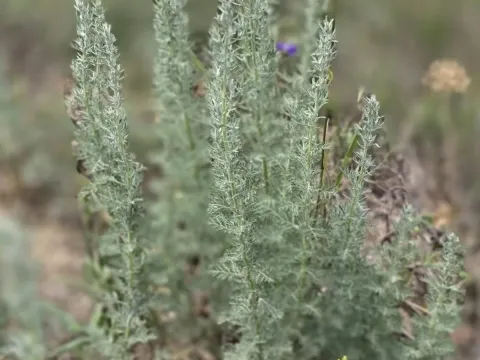
Roman wormwood
Artemisia pontica
Sowing of Roman wormwood is mainly carried out by seeds in the spring when the soil temperature reaches 10–12 degrees Celsius. The tiny seeds require shallow covering, not more than 0.5–1 cm, to ensure optimal germination rates.
What the section contains
Roman wormwood
In large-scale production, the seedling method is frequently used, allowing for more robust plants to be established by the end of the first growing season. Seedlings are transplanted into open fields during the 3–4 true leaf development phase.
Vegetative propagation via rhizome division is also possible, enabling faster establishment of marketable biomass in the field. Division is performed either in early spring before active sap flow begins or in the autumn during the dormant period.
Planting density is calculated based on future mechanical maintenance, leaving row spacing of 60–70 cm. This provides the necessary ventilation and ease of access for inter-row soil cultivation tasks.
The plant has a high regenerative capacity, so with proper care, a plantation can remain productive in the same location for up to 5–7 years without the need to replace planting material.
Artemisia pontica belongs to the Asteraceae family and is a perennial essential-oil plant with high ecological plasticity. It prefers open, sunny locations, as shaded areas significantly reduce the concentration of biologically active compounds.
The crop is quite drought-tolerant and cannot withstand waterlogging; therefore, light sandy or loamy soils with a neutral to slightly alkaline reaction are preferred. Heavy clay soils require structural improvement using bulking agents prior to planting.
The plant grows successfully in temperate climates and tolerates winter frosts well if there is sufficient snow cover. Effective drainage is a critical requirement, as excessive moisture in the root zone during winter can lead to crown rot and plant death.
During the active growth phase, the crop responds well to moderate applications of phosphorus-potassium fertilizers, which promote stem strength and essential oil accumulation. Excessive nitrogen can lead to overgrowth of green mass at the expense of raw material quality.
Crucial to Roman wormwood agronomy is the control of weed competition during the first months of life. Regular soil loosening promotes root aeration and accelerates root system development, making the plant resilient to adverse environmental factors.
The yield of Roman wormwood depends on the age of the plantation and the agronomic background. On average, one hectare can produce 5 to 10 tons of raw green mass, which shrinks in volume by approximately 3–4 times after drying.
Maximum productivity is observed in the 3rd or 4th year, when bushes reach their peak density and branching. Timely cutting stimulates side shoot growth and increases the total annual biomass of the plant.
The essential oil content in dried raw material ranges from 0.5% to 1.2%, depending on the plant's phenological stage at the time of harvest. This metric determines the economic value of the harvest for the pharmaceutical and perfume industries.
To improve yields, rejuvenation pruning is recommended, which prevents leaf reduction and the loss of biological activity. Balanced irrigation during drought periods allows for leaf turgor maintenance and higher yields of the target product.
Economic efficiency also depends on the quality of post-harvest processing, which must avoid overheating the raw material. Proper drying preserves volatile compounds and ensures compliance with pharmacopeial standards.
Roman wormwood has a distinctive scent and bitter taste, making it relatively resistant to most pests. However, in high humidity, the plants can be susceptible to powdery mildew, which causes a white coating on the leaves.
In dense plantings, outbreaks of rust may occur, requiring the timely removal and destruction of infected plant parts. Prevention consists of maintaining good ventilation and avoiding over-irrigation.
Occasionally, aphid infestations are noted, which suck sap from young shoots and degrade essential oil quality. For pest management, biological control agents are preferred to ensure safety for subsequent medicinal use.
Root rot can occur in areas with poor drainage during prolonged rainy spells. Preventing this requires maintaining field cleanliness by removing plant debris, which can serve as an infection reservoir.
Upon detection of initial disease symptoms, reducing intervals between weedings and ensuring optimal sunlight access to all parts of the plant is recommended, as this is the best method to suppress pathogenic microflora.
Harvesting is performed during the period of mass flowering when the concentration of essential oils and active substances in the aerial parts peaks. Usually, this occurs in the second half of summer, yielding the highest quality raw material.
Cutting is carried out at a height of 10–15 cm from the soil surface using specialized machinery or manual tools. It is crucial to avoid collecting the lignified lower parts of the stem, which lack medicinal value.
The collected raw material should not be left in piles for long periods to avoid self-heating, which leads to the degradation of essential oils. Transporting the mass to the drying facility immediately after harvesting is recommended.
Drying is carried out in well-ventilated rooms or specialized dryers at temperatures not exceeding 40 degrees Celsius. Overheating significantly reduces product quality and alters the chemical composition.
The finished product is stored in tightly sealed containers in a dry, dark place to prevent the loss of aroma and biological properties. Properly dried Roman wormwood retains its silvery shade and specific bitter aroma for long shelf-life periods.