
Rolandra
Rolandra
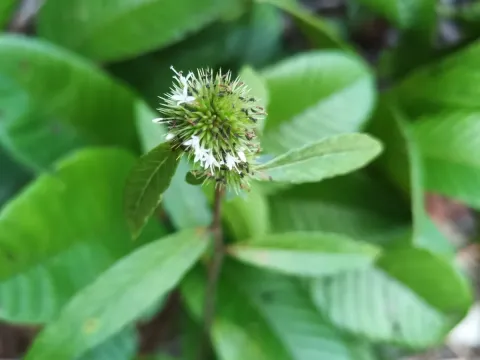
Rolandra (Latin: Rolandra fruticosa) is a monotypic genus of perennial herbs or subshrubs belonging to the Asteraceae family. In an agricultural context or when grown as medicinal raw material, seeds are sown in greenhouse conditions or directly into well-warmed soil in tropical regions.
What the section contains

Rolandra
The seeds of the plant show good germination rates when kept at temperatures between 22 and 25 degrees Celsius. An essential condition is the use of a loose, well-draining substrate, as water stagnation during the germination stage can lead to the death of young shoots.
In its natural habitat, the plant propagates mainly through seeds, with the self-seeding process occurring quite actively. For planned cultivation, it is recommended to maintain a distance of about 30–40 centimeters between plants to ensure full development of the root system.
The vegetation period of Rolandra is quite long, so when attempting introduction in temperate climate regions, the plant requires greenhouse-started seedlings. This helps to shorten the time until marketable raw materials are obtained and increases the adaptability of the crop to changing weather conditions.
Soil preparation for sowing includes deep loosening and the application of organic fertilizers, as the plant prefers nutrient-rich but not waterlogged soils with a neutral or slightly acidic pH level.
Rolandra is a typical representative of tropical flora and thus has high requirements for temperature. The plant does not tolerate frost, and even a short-term drop in temperature below 10 degrees can provoke growth suppression and the development of fungal diseases.
The crop is light-loving; however, young plants in the first weeks after germination require light shading from direct sunlight. Optimal lighting contributes to the formation of a dense rosette of leaves and the intensive accumulation of biologically active substances.
Requirements for soil moisture are moderate; the crop develops better with regular watering but is extremely sensitive to excessive water accumulation in the root zone. The soil substrate must be enriched with humus to provide the plant with necessary mineral elements.
The plant adapts well to various soil types, including rocky and sandy substrates, provided sufficient nutrition is available. However, the best development indices are observed on fertile loams with good drainage.
In industrial cultivation, it is necessary to monitor soil pH levels, as sharp fluctuations in acidity can lead to micronutrient deficiencies, which immediately reflects on the appearance and chemical composition of the plant's aerial parts.
The main value of Rolandra lies in its aerial parts—leaves and inflorescences—used in traditional medicine and pharmacology. The yield of green mass directly depends on planting density and the level of moisture and light provided to the plant.
With intensive care and regular fertilization, two to three biomass harvest cycles can be achieved per season. Average yield indicators vary depending on the growing region and range from 1.5 to 3 tons of dry raw material per hectare when agronomic standards are met.
The maximum output of active substances is observed during the beginning of the flowering period, so harvest times must be strictly coordinated with the phenophases of the crop's development. Early harvesting leads to a decrease in secondary metabolite output, while delayed harvesting leads to stem hardening.
The plant's productivity also depends on the genetic potential of the population used for propagation. Breeding work with this crop is limited, so the main increase in yield is achieved by optimizing growing conditions.
To preserve product quality, it is important to ensure rapid drying of the biomass immediately after harvest. A properly organized post-harvest processing process allows for the retention of all therapeutic properties of the plant and minimizes losses during storage.
Rolandra is quite resistant to specific pests due to the presence of specific terpenoids and other protective compounds in its tissues. However, in dense plantings, it can be affected by aphids and spider mites, especially in greenhouse conditions.
Among fungal pathogens, root rot caused by excessive moisture and lack of soil aeration is the greatest threat. Also, during periods of high humidity, powdery mildew may develop on the leaf blades.
Pest control measures include regular inspection of plantings and the use of biological insecticides, which is extremely important for crops intended for use as medicinal or food raw materials.
Disease prevention is based on adhering to crop rotation and preventing excessive plant density. It is also important to ensure timely removal of weeds, which can act as reservoirs for viral and fungal infections.
Improper agronomic practices, specifically excessive night-time watering, are the main provoking factors for disease development, which is why drip irrigation is considered the preferred irrigation method for this crop.
Harvesting of Rolandra is carried out manually or using specialized mowers set to a cutting height that prevents soil and foreign matter from getting into the raw material. The optimal time for harvesting is in the morning hours after dew has evaporated.
Leaves and upper shoot parts are cut during the budding phase or at the beginning of flowering, when the concentration of biologically active compounds reaches its peak. This ensures the highest quality output of the final medicinal product.
After harvesting, the material must be sent for drying immediately. Using natural drying in the shade under a canopy with good ventilation allows the leaves to retain their natural color and aroma, preventing them from darkening and rotting.
The temperature during artificial drying in industrial dryers should not exceed 45 degrees Celsius to prevent the destruction of thermolabile components present in the plant.
The finished dried raw material is packaged in airtight containers or paper bags to prevent moisture absorption from the environment and is then stored in dry, dark warehouse facilities until processing.