
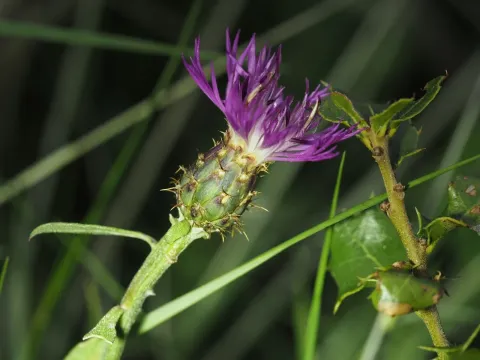
Rough star-thistle
Centaurea aspera
Rough star-thistle (lat. Centaurea aspera) belongs to the Asteraceae family. It is a hardy herbaceous plant known for its adaptability to arid Mediterranean environments.
What the section contains
Rough star-thistle
For successful cultivation, sowing should be timed with the early spring thaw or late autumn, ensuring the seeds are placed in well-prepared, loose soil. Depth control is critical, with 1–2 cm being ideal.
The plant exhibits vigorous seedling emergence once temperatures reach a stable range of 15–20 degrees Celsius. Maintaining consistent soil moisture during the first few weeks is key to establishing a strong root system.
In farming applications, seeds are often drilled in rows to allow for mechanical weeding and proper airflow. Spacing should be approximately 30–40 cm to prevent overcrowding as the plants mature.
Once established, the plant becomes highly resilient to environmental stress, making it a low-maintenance choice for areas where water conservation is a priority.
This species thrives in full sun exposure. It is highly intolerant of shade, which can cause etiolation and significantly reduce the production of flower heads.
It prefers well-drained, sandy, or gravelly soils. It is remarkably tolerant of nutrient-poor soils, making it an excellent candidate for marginal lands where other crops may struggle.
Soil pH levels should ideally range between neutral and slightly alkaline. High nitrogen availability is not required and can lead to excessive vegetative growth at the expense of reproductive development.
Water requirements are relatively low, as the plant possesses a deep root system adapted to water scarcity. It performs best in regions with hot, dry summers and mild winters.
Routine agronomic care consists primarily of inter-row cultivation to suppress competition from other weeds, especially during the initial growth phase of the season.
The primary threats include fungal pathogens such as powdery mildew, which thrive in stagnant air or humid conditions. Proper plant spacing is the most effective preventative measure.
Insect pests like aphids can colonize the soft tissue of flower buds. Integrated pest management using natural predators like ladybugs is highly recommended for this crop.
Root-feeding larvae can damage seedlings. Crop rotation helps in breaking the pest life cycle, particularly if the land was previously utilized for other Asteraceae members.
In addition to pests, weed competition remains a challenge. Early-season mechanical weeding is essential to give the crop an advantage over aggressive pioneer weeds.
Environmental stress, such as waterlogging, is arguably the biggest threat to this plant, often leading to crown rot and complete plant failure in poorly managed fields.