
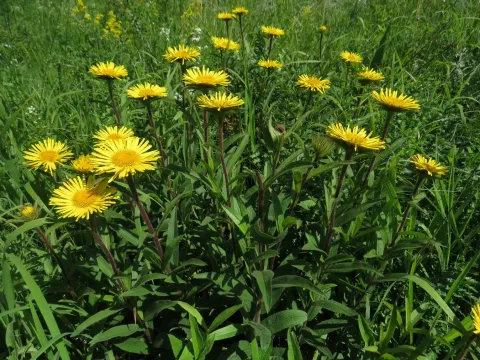
Rough inula
Inula hirta
Rough inula (Inula hirta) is a perennial herbaceous plant belonging to the Asteraceae family, valued for its medicinal properties and hardiness.
What the section contains
Rough inula
The planting of seeds can be performed either in late autumn for winter stratification or in early spring when the soil temperature begins to rise.
Seeds require a cold treatment (stratification) for approximately 4 to 6 weeks to ensure uniform and high germination rates in the field.
It is recommended to plant seeds at a shallow depth of 0.5 cm, ensuring the soil remains moist but not waterlogged during the germination process.
Seedlings are typically transplanted to their permanent locations once they have developed at least two or three sets of true leaves.
This species thrives in well-drained, sunny locations with fertile soils, showing significant adaptability to various climatic conditions.
Rough inula is highly drought-tolerant, making it suitable for regions with limited rainfall or areas where irrigation infrastructure is not available.
The plant prefers neutral or slightly alkaline soils with good aeration to prevent the development of root diseases caused by poor drainage.
In terms of agricultural management, weed control is essential during the first year of growth to ensure young plants are not outcompeted.
Adequate spacing between plants, usually 30-40 cm, promotes better air circulation and reduces the likelihood of fungal outbreaks.
Like many plants in the Asteraceae family, Inula hirta can be susceptible to powdery mildew, especially in humid and poorly ventilated conditions.
Root rot is a common threat in heavy, compacted soils where stagnant water promotes the growth of pathogenic fungi and oomycetes.
Aphids and certain types of leaf-eating larvae may infest the foliage, requiring careful monitoring and potential use of organic insecticides.
Implementing proper crop rotation helps in breaking the life cycle of soil-borne pathogens that might otherwise accumulate in the planting area.
Biological controls are preferred over broad-spectrum chemicals to preserve the quality of the plant material for medicinal use.
The primary harvest target for Inula hirta is the root system, which should be collected in late autumn when the active ingredients are most concentrated.
Mechanical harvesting must be performed carefully to maintain the integrity of the roots, as fragmented roots can lose potency more quickly.
Post-harvest processing involves washing the roots thoroughly, removing any fibrous lateral rootlets, and slicing them for efficient drying.
Drying is conducted at controlled temperatures, typically between 40°C and 45°C, to ensure the preservation of essential oils and inulin.
Final storage conditions must be moisture-free and dark to maintain the shelf life and effectiveness of the dried botanical material.