
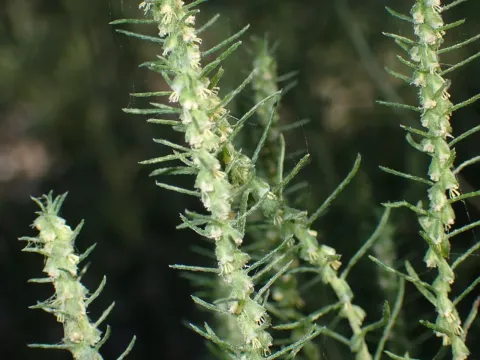
Rough sumpweed
Iva asperifolia
Rough sumpweed (Latin: Iva asperifolia) is a perennial herbaceous plant belonging to the Asteraceae family. In agricultural settings, it is primarily identified as a weed species that interferes with the development of primary crops.
What the section contains
Rough sumpweed
The plant is distinguished by a robust root system and stems covered with stiff hairs, from which its common name originates. This structure allows it to thrive in various soil types and compete effectively for resources.
Originating from temperate regions, the species is widely distributed across open lands, roadsides, and neglected agricultural fields. It adapts well to environments with moderate moisture and high solar radiation.
It prefers well-drained, fertile soils where it can develop a large vegetative mass, though it shows notable tolerance to fluctuations in environmental conditions, including short-term droughts.
Agricultural management of this plant requires deep tillage practices and the use of systemic herbicides to weaken the rootstock and prevent re-establishment within the crop rotation.
The main threat posed by Iva asperifolia is the severe competition with crops for nutrients, sunlight, and water, which ultimately leads to a reduction in total harvest yield.
The plant serves as a habitat for various insect pests that can cause secondary infestations on adjacent healthy crops, complicating pest management programs.
It is also a significant concern for phytosanitary reasons, as it acts as a reservoir for numerous plant pathogens and viruses that affect staple crops.
The dispersal mechanism of its seeds makes it highly invasive, allowing it to quickly colonize land that is left unmanaged or poorly maintained during the off-season.
Integrated weed management, including the use of competitive crop varieties and timely mechanical cultivation, is essential to minimize the negative impact of this species.