
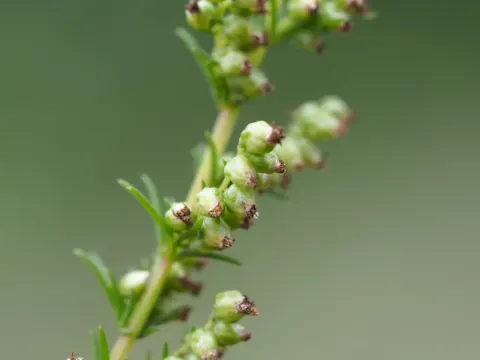
Capillary wormwood
Artemisia capillaris
Capillary wormwood (Artemisia capillaris) is a perennial herb belonging to the Asteraceae family. Agricultural cultivation primarily involves seed propagation, which requires stratification to break dormancy and ensure uniform germination.
What the section contains
Capillary wormwood
The optimal sowing time in open fields occurs in early spring, once the soil temperature consistently reaches 8–10 degrees Celsius. Seeds should be sown shallowly, as light exposure is necessary to stimulate the germination process.
Using a greenhouse for seedling production is a common practice that allows for early start and robust plant development. Transplanting seedlings into the field is carried out once the risk of late frost has completely passed.
The planting density is typically set at 30 by 40 centimeters to ensure adequate space for bush development and ease of mechanical weed control. Maintaining proper spacing is crucial for airflow, which reduces disease risk.
In smaller operations, vegetative propagation via root cuttings can be utilized to ensure genetic consistency and faster establishment of new plantations compared to seed-based methods.
This crop thrives in areas with full sun exposure, which is essential for the accumulation of secondary metabolites and essential oils. Any shade will lead to etiolation and a significant decrease in the chemical quality of the harvest.
Well-drained, sandy loam soils with a neutral to slightly alkaline pH are the most suitable for cultivation. Poorly drained, heavy clay soils must be avoided as they promote root rot and stunted plant growth.
While the plant is quite drought-tolerant once established, supplemental irrigation during the initial phase of development is recommended to build a strong root system. This is vital for surviving the peak heat of summer months.
Maintaining a loose soil structure through regular cultivation between rows is critical. This practice improves soil aeration and prevents the formation of crusts, which can negatively impact the plant's metabolic activity.
Fertilization management should focus on balanced nutrient application, favoring phosphorus and potassium to enhance stalk strength. Over-fertilization with nitrogen must be avoided, as it can reduce the concentration of active medicinal compounds.
The economic value of this crop lies in its aerial parts, which are harvested for pharmaceutical and cosmetic use. Typical yields range between 1.5 and 2.5 tons of dry biomass per hectare under optimal conditions.
The harvesting timing is strictly tied to the plant's growth stage; maximizing yield requires timing the collection exactly at the early budding phase, before flowers fully open to ensure the highest chemical profile.
The extracted essential oils and extracts from the plant are highly sought after by the herbal industry. Consistency in the cultivation process ensures that the harvest meets the specific requirements of international pharmacopoeias.
The plant demonstrates significant regenerative potential, often allowing for multiple cuts in a single season. Proper field management ensures the sustainability of the harvest for several years before replanting is necessary.
Product quality is evaluated based on the concentration of active ingredients, physical purity, and absence of foreign organic matter, ensuring the crop remains a staple for herbal manufacturers.
Fungal pathogens such as powdery mildew represent the primary threat to plantation health, especially during seasons with high humidity. Improving field ventilation remains the most effective prophylactic measure.
Insects like aphids and various weevils can cause substantial foliage damage if left unchecked. Early monitoring and the use of integrated pest management are necessary to protect the yield from significant losses.
Weed management is critical during the seedling establishment stage, as the plant is sensitive to competition. Mechanical weeding and strategic mulching help to minimize the need for chemical intervention.
Crop rotation protocols should be followed to avoid the build-up of soil-borne pathogens in the root zone. A four-year cycle is generally recommended to keep the land productive and disease-free.
Biological control agents, including beneficial bacteria and fungi, are increasingly used in modern agro-farming to replace traditional pesticides, aligning with the market demand for organically certified raw materials.
Harvesting is typically performed using mechanical mowers set to leave at least 10–15 centimeters of stem above the ground. This ensures that the plant can successfully regenerate and provide subsequent cuttings later in the season.
Prompt post-harvest handling is vital, as the cut biomass must be moved to the drying facility immediately to prevent fermentation or oxidation. Proper drying temperatures should not exceed 45 degrees Celsius.
After the drying process is complete, the herb is sorted to remove stems and impurities. This mechanical cleaning process is essential for achieving the required quality grades for industrial processing.
Storage of the finished product requires a cool, dark, and well-ventilated environment. Using moisture-proof packaging ensures that the biological active ingredients remain stable for extended periods.
Final quality control involves standardized testing for chemical components, ensuring that the harvested batch meets the required specifications for pharmaceutical or cosmetic applications.