
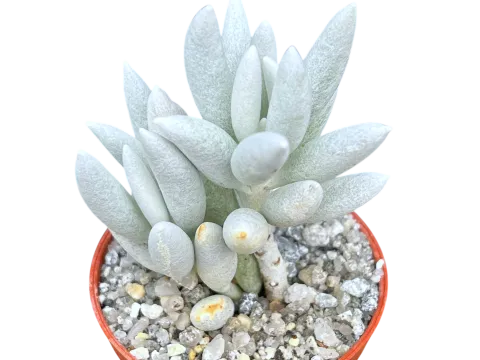
Caputia
Caputia
Caputia is a genus of succulent plants belonging to the Asteraceae family. These plants are native to the arid regions of Southern Africa and have evolved to store water in their fleshy leaves and stems to survive prolonged droughts.
What the section contains


Caputia
The primary requirement for successful cultivation is high-intensity light. Caputia thrives in full sun conditions, which helps maintain the plant's characteristic compact habit and intense foliage coloration.
The soil substrate must be highly porous and inorganic-based. A mixture comprising coarse sand, pumice, and minimal peat is ideal to ensure rapid drainage and prevent the roots from remaining damp for extended periods.
Climate management involves providing a warm, dry environment during the active growing season. During the winter dormancy period, the plant requires cooler temperatures to initiate healthy growth the following spring.
Watering frequency should be strictly regulated based on the state of the soil. The substrate must be allowed to dry out completely before the next irrigation cycle, avoiding any risk of waterlogging.
Root rot is the most common and destructive condition affecting Caputia. It is primarily caused by poor drainage or overwatering, which creates an anaerobic environment fatal to the succulent's root system.
Mealybugs are the most frequent pests observed on these plants. They colonize the leaf axils, sucking sap and weakening the plant, which often necessitates systemic insecticide treatments to eliminate infestations.
Spider mites can also become a problem in environments with low air circulation and high heat. Their presence is indicated by stippling on the leaves and fine webbing around the stems.
To maintain plant health, it is essential to monitor for early signs of decay. Prompt removal of damaged tissue and adjustment of irrigation schedules are the most effective management practices.
Good cultural hygiene, such as removing dead foliage and ensuring sufficient airflow around the plants, significantly reduces the likelihood of both fungal outbreaks and insect colonization.