
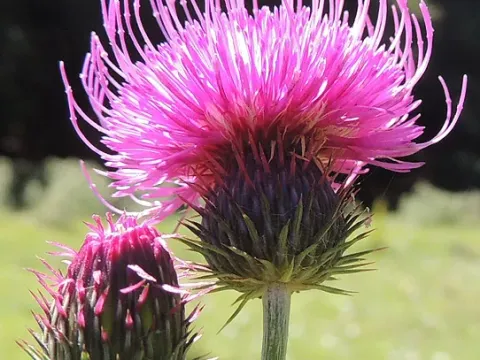
Carduus affinis
Carduus affinis
Carduus affinis, known in botanical literature as a member of the Asteraceae family, is a herbaceous plant characterized by its robust structure and spiny foliage. This plant is well-adapted to open habitats and is recognized for its ability to thrive in various soil types, particularly those with good drainage.
What the section contains
Carduus affinis
Botanically, the species features a deep taproot system, which contributes to its resilience in varying climatic conditions. The plant undergoes a lifecycle that often spans two years, starting with a vegetative rosette in the first season and producing flowering stems in the second.
Environmental requirements for Carduus affinis include full sun exposure, as the species does not tolerate significant shading. It prefers temperate climates with moderate rainfall and is capable of enduring dry periods due to its structural adaptations for water conservation.
Regarding soil, the plant favors fertile, neutral, or slightly alkaline substrates. It can establish itself in disturbed agricultural lands, making it a competitor for resources against standard cultivated crops if not managed properly through established agronomic practices.
Proper cultivation management requires an understanding of the plant's phenology. Effective control in agricultural fields is best achieved by targeting the plant during the early rosette stage before the development of reproductive organs, which significantly reduces the seed bank in the soil.
The plant faces several biological threats, including fungal pathogens such as rust and powdery mildew. These diseases are more prevalent in high-humidity environments and can compromise the structural integrity and health of the foliage and stem.
Pests, particularly insects such as weevils and certain Lepidoptera larvae, are common threats. They feed on the leaves, stems, and flower heads, which naturally serves to regulate the population density of the species in wild populations.
Agronomic management to prevent excessive spread often involves mechanical methods such as mowing or deep tillage. By removing the aerial parts of the plant before seed maturation, farmers can effectively limit the plant's spread to neighboring areas.
Chemical control strategies are also utilized when mechanical methods are insufficient, often involving selective herbicides. These must be applied with precision to ensure effective results while maintaining environmental safety standards within the crop production area.
Biological competition plays a significant role in limiting the success of Carduus affinis. Dense planting of competitive ground cover crops or forage species can naturally suppress the germination of thistle seeds by reducing light penetration and space availability.