
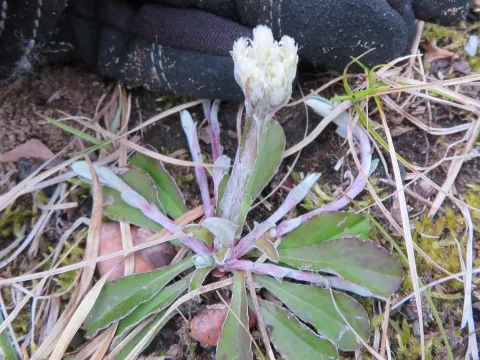
Canadian pussytoes
Antennaria canadensis
Canadian pussytoes (Antennaria canadensis) is a hardy perennial belonging to the Asteraceae family. Seeds are typically sown in late autumn for winter stratification or in early spring indoors.
What the section contains
Canadian pussytoes
The seeds require light to germinate, so they should be pressed into the surface of the growing medium rather than buried deep beneath the soil layer.
Seedlings develop slowly, requiring a consistent environment with moderate moisture until they establish enough root structure for transplanting into the garden.
Vegetative propagation via clump division is the most common and fastest method for domestic cultivation, ensuring consistent growth across the garden bed.
When transplanting, ensure that the plants are spaced appropriately to allow for natural spreading and the formation of a dense, carpet-like groundcover.
This species thrives in nutrient-poor, dry, and well-draining soils, making it an excellent choice for rock gardens and areas with poor soil fertility.
Full sun is a primary requirement for the plant to maintain its low-growing, compact habit; shade leads to etiolation and decreased flowering performance.
The plant is highly drought-tolerant once established, being well-adapted to harsh environmental conditions and low-rainfall climates.
Soil pH should ideally be neutral or slightly acidic, and the presence of organic matter should be kept to a minimum to prevent over-fertilization.
Effective drainage is non-negotiable; heavy, clay-based soils should be amended with grit or sand to mimic the plant's natural rocky habitat.
Root rot caused by excessive moisture or standing water is the primary threat to the longevity and health of the plant during the winter and spring seasons.
Powdery mildew can occur during periods of high humidity and poor air circulation, necessitating prompt treatment or better spacing for airflow.
Aphids may occasionally infest the flower stalks during the peak growing season, causing stunted growth and damage to the inflorescences.
Weed encroachment is a significant management issue, as the plant grows slowly and can be easily overwhelmed by more aggressive meadow or garden weeds.
To mitigate disease risks, avoid overhead watering, which keeps the foliage wet for extended periods and increases susceptibility to fungal pathogens.