
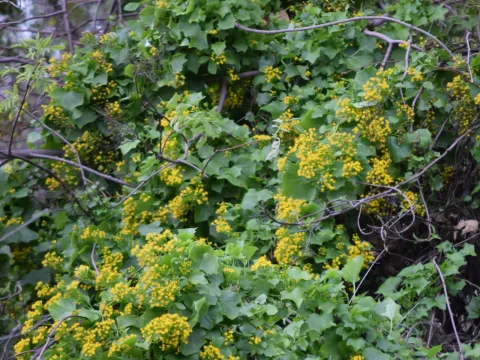
Cape ivy
Delairea Lem.
Delairea odorata, widely known as Cape ivy, belongs to the Asteraceae family. It is a vigorous, climbing, evergreen perennial vine recognized for its rapid growth rate and succulent, ivy-shaped leaves that can cover large areas in a short time.
What the section contains

Cape ivy
Originating from South Africa, this plant has adapted to various temperate climates worldwide. While it is highly prized for its ornamental value in vertical landscaping, it is also classified as an invasive weed in several regions due to its aggressive spread.
For optimal health, Cape ivy requires well-drained, fertile soil rich in organic matter. It thrives in partially shaded environments, as excessive heat and direct sun exposure can dehydrate the foliage and inhibit its vibrant, lush development.
The plant is frost-tender and requires protection when temperatures drop below freezing. In colder climates, it is typically grown in pots as an indoor plant or a seasonal garden addition, needing to be moved indoors during the winter months.
Agrotechnical practices involve consistent irrigation, keeping the soil moist but never waterlogged. Fertilization with a balanced nutrient mix during the active growth phase supports the development of its dense stems and glossy, green leaves.
Common pests affecting Delairea odorata include spider mites, aphids, and mealybugs, which are particularly problematic in greenhouse or indoor environments. Effective management involves maintaining adequate humidity and using horticultural soaps or systemic insecticides when necessary.
Fungal issues, such as root rot and leaf spot, may occur if the plant is kept in environments with poor air circulation or excessive moisture. Ensuring proper spacing and periodic pruning of overgrown vines are essential strategies to prevent disease outbreaks and manage plant growth.