
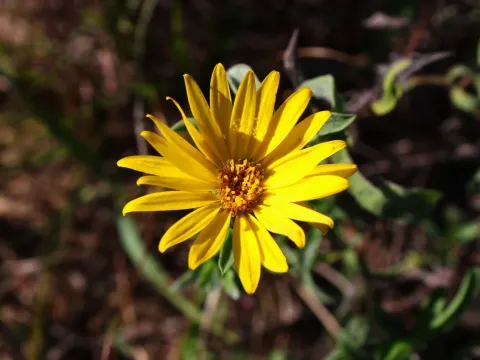
Camphor goldenweed
Heterotheca camporum
Camphor goldenweed (Heterotheca camporum) is a perennial herbaceous plant belonging to the Asteraceae family. For optimal establishment, sowing should be performed in early spring once soil temperatures reach 8–10 degrees Celsius, ensuring favorable conditions for seed germination.
What the section contains
Camphor goldenweed
Due to the hardiness of the seeds, dormant autumn sowing is also a viable option in many climatic zones. Seeds should be sown at a shallow depth of 1–2 centimeters, as they require sufficient light exposure to initiate the germination process effectively.
Utilizing a row-seeding method with spacing between 45 and 60 centimeters is recommended for professional field production. This spacing facilitates easier weed control and improves airflow, reducing the risk of fungal development during the early stages of growth.
Immediate rolling of the soil after sowing is a critical technological step. This practice ensures firm soil-to-seed contact, prevents the surface layer from drying out too quickly, and significantly increases the overall field emergence percentage.
Once established, the plants develop a robust root system, allowing them to withstand various environmental stresses. Regular inspection of plant density during the first weeks of vegetation is necessary to identify any gaps that may require re-seeding to ensure a full stand.
Heterotheca camporum displays strong environmental plasticity, thriving best in well-drained sandy loam or loamy soils. It avoids poorly drained areas where waterlogging might cause root rot, making site selection a priority for successful cultivation.
The plant is highly photophilous and requires full sun exposure to reach its maximum biomass potential. Shade-induced growth typically results in weaker stems and reduced foliage quality, which diminishes the economic value of the harvested crop.
It demonstrates remarkable drought tolerance once fully established, attributed to its deep taproot system. This makes it an ideal candidate for regions with fluctuating rainfall patterns, as it can sustain growth even during relatively dry periods.
Fertilization should be managed based on soil testing, with a focus on phosphorus and potassium to support structural growth. Excessive nitrogen application is discouraged as it can lead to overly rapid shoot development, potentially weakening the plant's structural integrity.
The crop is well-adapted to temperate climate zones and does not require special protection against wind or minor temperature fluctuations. Maintenance practices should focus on keeping the inter-row spaces free of invasive weeds, particularly during the first growing season.
Yield capacity of Camphor goldenweed is closely linked to the maturity of the stand and soil fertility. Productivity typically peaks during the second and third years as the plant develops its full root system and stabilizes its physiological processes.
Depending on the climatic zone, the crop may provide up to two cuttings per season. The first cutting is usually taken at the early flowering stage to ensure the highest nutritional quality, while the second cutting is obtained from the regrowth later in the summer.
Maintaining a consistent stand density is essential for high yield performance. Farmers should monitor the field for plant mortality, as sparse stands allow for increased weed competition, which can negatively impact the total volume of harvested biomass.
Harvest timing is a key determinant of quality. For biomass or forage purposes, the plant should be harvested before the stems become overly lignified, as this preserves the nutritional value and digestibility of the harvest.
Proper management of the crop cycle ensures consistent yield over several years. Through the application of balanced agronomic practices, the field can maintain its productivity, offering a sustainable source of plant material for various industrial or agricultural applications.
While generally resilient, Camphor goldenweed may be susceptible to fungal diseases such as powdery mildew, especially during periods of high humidity and poor ventilation. Prompt identification and the use of appropriate fungicides are necessary to control such outbreaks.
Root rot is a potential concern if the soil remains waterlogged. Proper field drainage is the most effective preventative measure against this threat, ensuring that the roots remain in oxygenated soil conditions throughout the year.
Insects like leaf beetles or aphids can sometimes target the foliage or reproductive structures. Integrated pest management strategies, utilizing both biological controls and targeted applications, help in maintaining crop health while minimizing environmental impact.
Crop rotation is a fundamental practice to prevent the build-up of host-specific pathogens in the soil. Avoiding the planting of Heterotheca in fields recently occupied by other Asteraceae species is a crucial step in maintaining a healthy, disease-free plot.
Regular scouting of the fields allows for early detection of potential threats. By addressing small outbreaks of pests or diseases as soon as they are identified, growers can prevent significant yield loss and keep the plantation productive for a longer term.
Harvesting should be timed according to the intended use of the crop. For forage, cutting occurs during the peak flowering phase to maximize the protein and mineral content, ensuring that the material is in its most nutritious state for livestock.
If the goal is seed production, harvest must be carefully timed with the maturation of the seed heads. Since the seeds possess pappi that facilitate wind dispersal, they must be gathered promptly once they reach maturity to prevent substantial pre-harvest losses.
Once cut, the biomass must be dried rapidly to prevent mold and nutrient degradation. Using active drying techniques or well-ventilated field conditions is essential to produce high-quality hay that retains its color, aroma, and nutritional properties.
Seed cleaning is performed using specialized equipment to remove debris and chaff. Properly cleaned seeds show improved viability and are easier to store and distribute during the next planting season, ensuring high germination rates for future crops.
Successful storage relies on maintaining low humidity levels in the storage facility. Stored material should be protected from moisture and temperature spikes to maintain its long-term viability, allowing for consistent future planting results.