
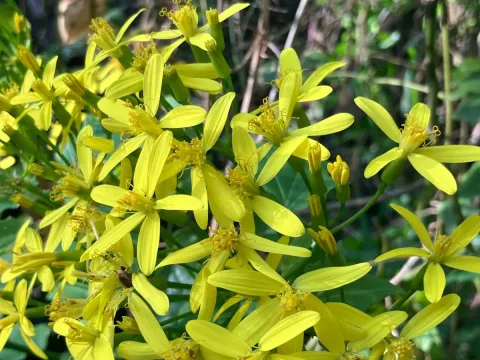
Canary creeper
Senecio tamoides
Canary creeper (Senecio tamoides) is a vigorous evergreen climber belonging to the Asteraceae family. Native to South Africa, it naturally inhabits forest fringes and thickets, utilizing its scandent stems to climb through surrounding vegetation towards light.
What the section contains
Canary creeper
The plant is highly regarded in horticulture for its rapid growth rate and lush, glossy heart-shaped foliage. It produces clusters of yellow, daisy-like flowers that provide significant visual interest during the late autumn and winter blooming periods.
The species thrives in sunny locations with partial shade, especially in hotter climates where scorching afternoon sun can damage the leaves. It requires a well-draining soil mix to prevent waterlogging, which the plant is highly sensitive to.
Regarding moisture, the soil should be kept consistently damp but never saturated. During the active growth phase, supplemental feeding with a balanced liquid fertilizer every few weeks promotes stronger stem development and foliage density.
Since the plant is frost-tender, it must be protected from freezing temperatures. In cooler temperate zones, it is typically grown in large pots that can be moved indoors or into a greenhouse before the onset of the first cold weather.
Spider mites are the most common pest, thriving in the warm, dry conditions typically found in greenhouses. They feed on plant sap, causing the foliage to appear mottled and eventually leading to leaf drop.
Aphids tend to congregate on tender new growth and developing flower buds, hindering the plant's structural development and potentially spreading harmful viruses that distort the leaves.
Root rot, often caused by pathogenic fungi such as Pythium, occurs when the plant is kept in overly wet or poorly drained soil. Ensuring excellent drainage and avoiding overwatering are the primary cultural controls for this threat.
Powdery mildew represents a significant fungal threat, appearing as a white, dusty layer on leaves during periods of high humidity and poor air circulation. Improving ventilation is essential for preventing outbreaks.
Whiteflies can infest the plant, particularly in sheltered environments, necessitating the use of yellow sticky traps or insecticidal soaps to maintain manageable population levels throughout the growing season.