
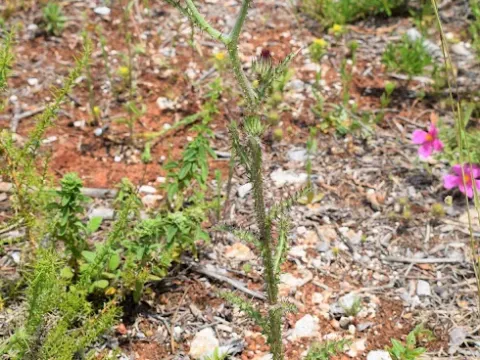
Carduus broteroi
Carduus broteroi
Carduus broteroi is a biennial herb that requires specific environmental cues for successful germination and growth. Sowing is typically conducted in the spring, once soil temperatures consistently reach 12-15 degrees Celsius to ensure rapid and uniform seedling emergence.
What the section contains
Carduus broteroi
The seeds should be planted at a shallow depth of 1-2 centimeters. Proper seedbed preparation is crucial; the soil must be cleared of competing weeds, as young seedlings of this thistle species are highly sensitive to competition for nutrients and space during their establishment phase.
Spacing between plants is a critical factor for final yield. Due to its growth habit, which involves the formation of a wide basal rosette in the first year, adequate room must be provided to avoid overcrowding, which can otherwise trigger fungal diseases.
In regions with shorter growing seasons, growers may utilize greenhouse propagation to ensure the plants reach a sufficient size before transplanting. This method helps in managing the crop's establishment in cooler temperate climates.
Post-emergence maintenance includes thinning the rows to ensure that each plant has sufficient access to light and soil resources. This practice is essential for the healthy development of the taproot, which supports the plant's growth in the following season.
As a member of the Asteraceae family, Carduus broteroi thrives in high-light conditions and requires full sun exposure. Inadequate sunlight leads to etiolation, weakened stems, and significantly reduced flower production, impacting the plant's overall viability.
The species prefers well-drained, neutral to calcareous soil types. While it shows remarkable tolerance for poor or rocky soils, its growth performance is significantly enhanced in soil with good aeration and moderate nutrient content.
The water requirements of the plant are moderate. It possesses an extensive root system that allows it to survive periods of drought once the plant is established. However, waterlogging is detrimental and can lead to rapid root decay, making soil drainage the most important site-selection factor.
Temperature tolerance is generally good, as the plant is adapted to Mediterranean-like conditions. It can endure mild frosts in its vegetative rosette stage, though extremely cold winters may necessitate protective measures like mulching to prevent damage to the crown.
Fertilization should be managed carefully, with a focus on phosphorus and potassium to encourage robust root systems and flower development. Excessive nitrogen should be avoided as it promotes leafy growth at the expense of floral initiation.
Powdery mildew is a common threat to this culture, especially in humid conditions with limited airflow. Management strategies emphasize keeping the plant canopy dry and ensuring sufficient distance between individual plants to prevent disease outbreaks.
Various weevil species represent the most significant pest risk, particularly those that target the flower heads. These pests can destroy the reproductive parts of the plant, leading to substantial yield losses in seed-production operations.
Aphids can also infest young growth, sucking sap and causing leaf distortion. Early monitoring and the use of integrated pest management practices are recommended to mitigate the impact of aphid colonies without excessive reliance on synthetic pesticides.
Crop rotation is essential for disease prevention. Planting Carduus broteroi in fields previously occupied by other Asteraceae members increases the risk of soil-borne pathogens and should be avoided in sustainable agricultural planning.
- Powdery mildew
- Weevils
- Aphids
- Root rot
- Mosaic viruses