
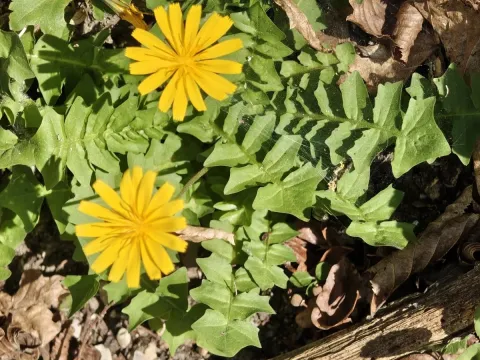
Aposeris foetida
Aposeris
Aposeris foetida is a perennial herbaceous plant belonging to the Asteraceae family. While not a conventional large-scale crop, it serves as a unique botanical specimen and possesses potential in specialized horticulture and medicinal research.
What the section contains

Aposeris foetida
The sowing process typically involves autumn planting to ensure natural stratification of the seeds, which is crucial for a successful germination rate in the following spring. Seeds should be placed in well-structured, friable soil rich in organic matter.
The optimal planting depth is approximately 1 cm, ensuring that seeds are not buried too deeply to inhibit emergence. Given the plant's natural habitat, it requires a shaded or semi-shaded location to thrive during the early growth stages.
During the first year, the focus is on establishing the basal rosette of leaves. Keeping the area free of weeds is essential for plant development, as competition in the early stages can significantly reduce the overall biomass.
Spacing should be managed to allow for adequate ventilation. A density of 15–20 plants per square meter is recommended to prevent overcrowding and maintain plant vigor throughout the growing season.
This plant thrives in moist, cool forest environments. It exhibits a high degree of shade tolerance, making it unsuitable for open fields with direct, intense sun exposure during the summer months.
The soil should be fertile, well-draining, and maintain a consistent moisture level. Aposeris foetida is sensitive to both extreme drought and waterlogged conditions, which can lead to rapid root degradation.
Temperature management is critical for the healthy growth of this species. It prefers temperate climates, avoiding heatwaves and extreme fluctuations that can stress the plant and reduce its physiological productivity.
Organic fertilizers are preferred for this culture to mimic its natural soil conditions. It is advisable to avoid high-nitrogen synthetic fertilizers, which can alter the plant's natural chemical profile and lead to excessive, weak growth.
Regular maintenance includes soil aeration and the use of organic mulch to keep the root zone cool and moist. This mimics the leaf litter environment the plant naturally prefers in its native European habitats.
Root rot is the most significant pathological threat to Aposeris. It is primarily caused by poor drainage and excessive moisture, making precise irrigation control the most effective preventative measure.
Slugs and snails are the primary pests that damage the succulent foliage of the plant. Gardeners should implement barrier methods or safe mollusks-control strategies to protect young rosettes from being consumed.
Aphids can infest the inflorescences, especially during the flowering period, potentially reducing the plant's ability to produce viable seeds. Integrated pest management using ecological methods is highly recommended.
Powdery mildew may occur when humidity is high and airflow is restricted within the planting area. Ensuring proper plant spacing is essential to minimize the development and spread of fungal spores.
Environmental stress, such as unseasonal frosts after the spring thaw, can cause damage to emerging shoots. Protective measures like frost covers should be used to safeguard the plants during erratic weather events.