
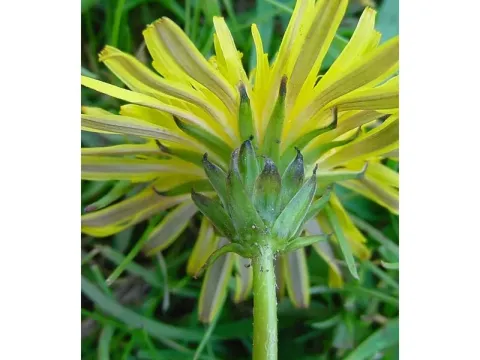
Apennine dandelion
Taraxacum apenninum
The Apennine dandelion (Taraxacum apenninum), a member of the Asteraceae family, is a specialized alpine plant. In its natural high-altitude habitat, seed dispersal is driven by wind, typically occurring in late summer following seed maturity.
What the section contains
Apennine dandelion
For cultivation purposes, seeds should be sown in autumn to benefit from natural stratification, or in early spring following a period of cold treatment. The soil must be well-prepared, loose, and free from any aggressive weed competition to ensure successful germination.
Seeds require light for germination and should be sown at a very shallow depth. It is essential to maintain proper spacing, typically 30 to 40 centimeters between rows, to provide sufficient room for the plant to develop its signature rosette.
Seedlings emerge optimally in cool temperature ranges between 10 and 15 degrees Celsius. Ensuring proper drainage is critical during the initial growth stages, as stagnant moisture can cause the young roots to rot rapidly.
When starting from seeds, avoid overly rich organic fertilizers which may weaken the plant's natural adaptation to harsh, nutrient-poor conditions typical of its native environment.
As a native of high-altitude ecosystems, the Apennine dandelion has strict environmental requirements. It thrives in locations with high light intensity and cool, clean, and well-circulating air.
The soil should be moderately moist but must provide excellent drainage. A gritty or sandy soil structure, similar to rocky slopes, is ideal for preventing the saturation issues that frequently occur in lowland garden environments.
The plant performs best in a climate with cool nights and moderate daytime temperatures. Exposure to significant diurnal temperature variation is essential for the metabolic stability of the species.
Irrigation must be carefully managed to ensure the soil remains barely moist; waterlogging is the primary cause of failure in domestic cultivation attempts. In periods of extreme heat, supplemental water should be applied with caution.
Fertilization needs are relatively low. An excess of nitrogen will result in lush, leafy growth that is vulnerable to pathogens and lacks the chemical profile characteristic of wild specimens.
The Apennine dandelion is a slow-growing species, meaning that commercial yield takes time to reach maturity. Typically, the plant remains in a vegetative state, developing its root system, throughout the entire first year.
Harvestable amounts of leaves and roots are generally not achievable until the second or third year of growth. Yields are intrinsically linked to the simulation of its natural alpine environment.
Seed production in controlled environments is often less efficient than in the wild, largely due to the specific requirements for successful pollination and the absence of native alpine insect populations.
To maximize the health and longevity of the plants, growers often use mineral mulches, such as crushed stone, to keep the root crown dry and mimic the native scree slope conditions.
Agricultural utility remains niche, primarily focused on botanical interest or the small-scale production of high-quality medicinal material for specialized herbal markets.
The most significant threats to this species are fungal diseases, particularly those affecting the root and root crown. Fungal pathogens thrive in poorly drained soils and high humidity, which are common in lowland agricultural setups.
Pests such as aphids can cause substantial damage to the developing leaves. Furthermore, soil-dwelling larvae can penetrate the taproot, weakening the plant and making it susceptible to secondary infections.
Weed control is a constant necessity. Because the Apennine dandelion lacks aggressive growth habits, it is quickly outcompeted by common garden weeds, necessitating manual weeding and careful site management.
Powdery mildew may occur when humidity levels are excessively high and air circulation is insufficient, leading to a degradation in the aesthetic and chemical quality of the foliage.
Using prophylactic biological treatments is recommended over chemical fungicides, as the latter can interfere with the delicate chemical balance of the plant's medicinal properties.
For the harvesting of leaves, the process should be undertaken during the peak flowering stage when active metabolic compounds are most concentrated in the plant tissue.
Roots should be harvested during the dormant season, specifically late autumn or very early spring, ensuring that the plant's energy reserves are fully localized within the root system for maximum potency.
Immediately following the harvest, the material must be washed thoroughly to remove all soil residues, as even small amounts of organic debris can lead to contamination during the drying process.
The drying phase must be executed in a shaded, well-ventilated area with careful temperature control, ideally keeping temperatures below 40 degrees Celsius to preserve essential oils.
Once dried, the product should be stored in opaque, airtight containers in a cool environment to maintain its therapeutic value and shelf life over extended periods.