
Partridge-breasted aloe
Gonialoe variegata
Description
Growing requirements
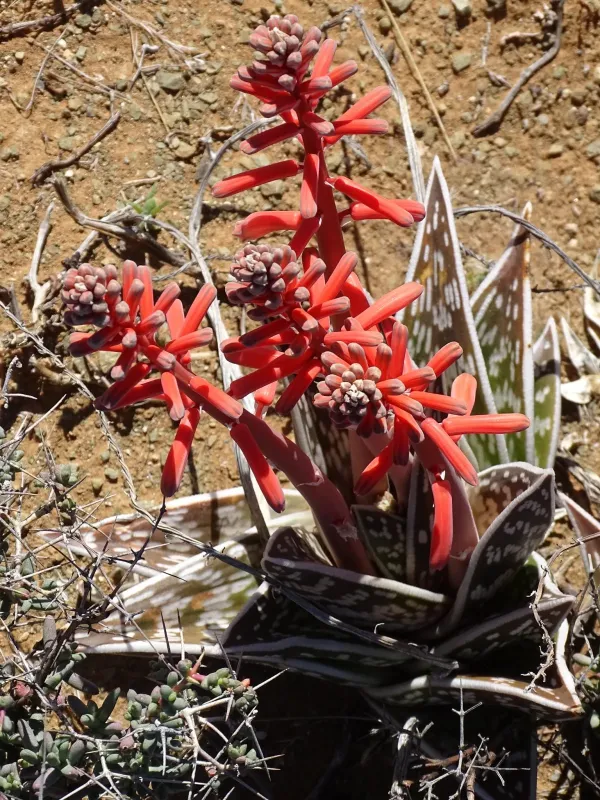
Partridge-breasted aloe (Gonialoe variegata) is a perennial succulent belonging to the Asphodelaceae family. Native to South Africa and Namibia, it is highly valued for its striking, spirally arranged leaves with white cross-banding.
Cultivation requires specific soil characteristics. The medium must be exceptionally well-draining; a mixture of pumice, perlite, and coarse sand is ideal to prevent moisture accumulation around the base.
Light intensity is critical for maintaining the plant's unique variegation and compact growth habit. Bright, indirect light is preferred, although the plant can tolerate some morning sun in temperate climates.
Environmental control is essential for successful growth. The plant thrives in temperatures between 20°C and 25°C during the growing season and requires a distinct cooling period during winter to initiate flowering.
Irrigation practices must be precise. Watering should follow a "soak and dry" method, ensuring the growing medium is completely dry before adding more water to simulate the plant's natural arid habitat.
Main diseases and pests
The primary threat to Gonialoe variegata is root rot caused by poor soil drainage or overwatering. Once rot symptoms appear, the plant often becomes difficult to rescue.
Mealybugs are the most common pest found on this species. They typically congregate deep within the succulent leaf axils, where they feed on sap and weaken the overall structure of the rosette.
Scale insects can also infest the leaves. These pests are often overlooked until significant damage occurs, requiring manual removal or the application of horticultural oils or systemic insecticides.
Proper air circulation is a necessary preventative measure against fungal outbreaks. Stagnant air environments increase the risk of powdery mildew and other bacterial infections on the leaf surfaces.
Monitoring the plant for discolored leaves or soft spots is a vital part of its maintenance routine to identify and isolate diseased plants early in the infection cycle.