
Gonialoe dinteri
Gonialoe dinteri
Description
Growing requirements
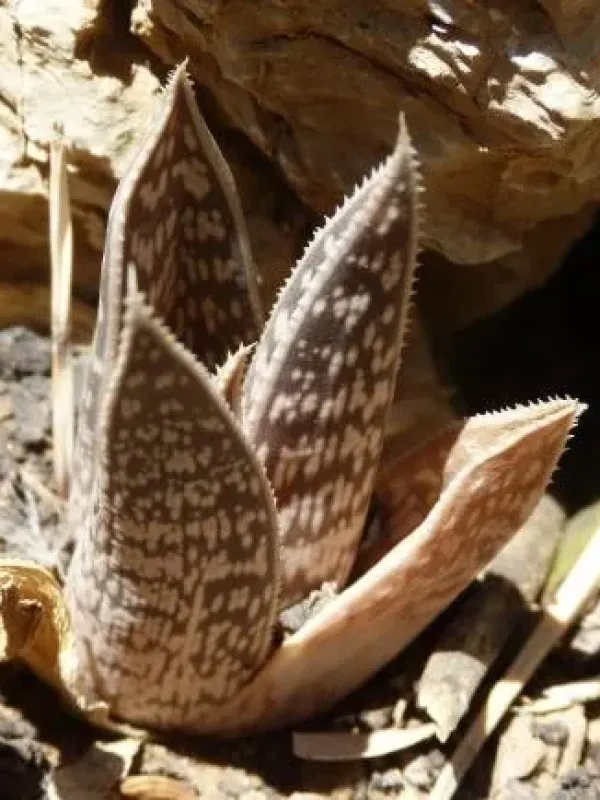
Gonialoe dinteri is a distinctive succulent species belonging to the Asphodelaceae family. Previously associated with the Aloe genus, it has been taxonomically reclassified due to specific morphological differences that set it apart as a separate, albeit closely related, group within the succulent botanical world.
The native habitat of this species is confined to the arid, rocky landscapes of Namibia. Its evolutionary history in such a harsh environment has endowed the plant with significant drought tolerance and an ability to thrive in poor, stony soils where nutrient availability is low but drainage is excellent.
For successful domestic cultivation, it is imperative to provide high-intensity light exposure. In indoor settings, placing the plant on a south-facing windowsill is generally recommended, as inadequate light can cause the plant to lose its compact, robust shape and become etiolated or physically weak.
The substrate must be highly inorganic, mimicking the natural mineral-rich soil of its origin. A mixture comprising coarse sand, grit, perlite, and a small portion of loamy soil is ideal. Proper drainage is the most critical factor, as the roots of Gonialoe dinteri are notoriously susceptible to hypoxia caused by excess water.
During the active growing season, watering should be performed sparingly and only when the soil has completely dried out. The dormant winter phase requires even stricter water control, as the plant transitions into a low-metabolic state, making it highly sensitive to any moisture accumulation in the potting mix.
Main diseases and pests
The primary threat to the health of Gonialoe dinteri is root rot, frequently triggered by excessive irrigation or a potting medium that retains moisture for too long. Once the root system is compromised, the plant struggles to transport water, often leading to a rapid decline if intervention is delayed.
Mealybugs constitute a common pest threat, often colonizing the tight crevices between the succulent leaves. These insects feed on the plant's sap and can severely weaken it over time, leaving it vulnerable to secondary infections or the colonization of sooty mold on the leaf surfaces.
Spider mites can also become an issue, particularly in environments with very low humidity and stagnant air. These pests damage the leaf tissue, causing characteristic yellowing and loss of structural integrity, which significantly impacts the aesthetic and physiological state of the succulent.
Effective pest management relies on early detection and physical removal where possible, followed by the application of targeted insecticides or acaricides. Maintaining good air circulation is a proactive measure that discourages both fungal outbreaks and the establishment of mite populations.
If fungal or bacterial pathogens are suspected, the affected individual must be isolated immediately. Pruning damaged roots and treating the remaining healthy base with broad-spectrum fungicides is essential. After such procedures, the plant should be left in a dry, well-ventilated area before being replanted into sterile substrate.