
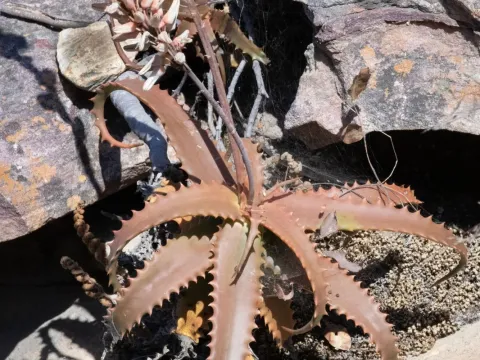
Aloe palmiformis
Aloe palmiformis
Aloe palmiformis is a distinct perennial succulent belonging to the Asphodelaceae family. This species is native to the arid and rocky landscapes of Namibia and parts of Angola, where it has evolved to thrive in nutrient-poor substrates.
What the section contains
Aloe palmiformis
The plant is characterized by its tree-like habit, growing a woody stem topped with a dense rosette of thick, succulent leaves. These biological adaptations allow the plant to store significant amounts of water, enabling survival in environments with scarce rainfall.
For successful cultivation, Aloe palmiformis requires a well-draining, gritty soil mix that mimics its natural rocky habitat. Standard potting soil is insufficient; a mixture of pumice, sand, and coarse gravel is recommended to ensure rapid water drainage and root health.
This crop demands high light intensity to maintain its structural integrity and leaf coloration. In temperate regions, it must be grown in greenhouses or bright sunrooms, as it is not frost-tolerant and requires temperatures well above freezing to thrive throughout the year.
Agricultural management should focus on the "soak and dry" method of irrigation. It is essential to allow the substrate to dry out completely between waterings to prevent root system collapse, which is the most common cause of failure in succulent cultivation.
The primary threats to Aloe palmiformis include root rot and stem rot caused by excessive soil moisture and poor air circulation. These pathogens thrive in stagnant, humid conditions, often leading to rapid tissue decay that is difficult to reverse once established.
Pests such as mealybugs, scale insects, and aphids frequently target the tender leaf bases and the stem. Regular monitoring of the plant's surface is necessary, and early intervention with neem oil or targeted insecticides is effective in keeping infestations under control.