
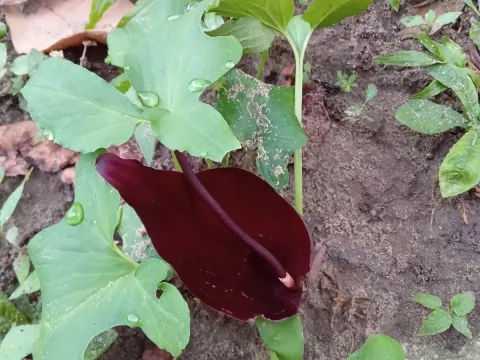
Typhonium roxburghii
Typhonium roxburghii
Typhonium roxburghii is a member of the Araceae family, known for its starchy, tuberous roots that are traditionally cultivated in tropical regions.
What the section contains
Typhonium roxburghii
Propagation is typically achieved through tuber division, ensuring that each segment has enough nutrients to support initial growth during the planting season.
Planting should occur at the onset of warmer weather, with tubers placed in well-prepared, loose soil to facilitate rapid root development.
Spacing between plants is crucial, usually maintained at 40 to 50 centimeters to ensure adequate air circulation and prevent overcrowding.
Consistent soil moisture is required immediately after planting to trigger the emergence of shoots and establish a strong foundation for the season.
This crop thrives in well-drained, fertile soil enriched with organic matter, which provides the necessary nutrients for tuber enlargement.
Typhonium roxburghii prefers shaded or semi-shaded environments, avoiding the direct, harsh midday sun that can scorch its large leaves.
Humidity is a vital factor; the plant performs best in environments where relative humidity remains consistently high throughout its growing phase.
Soil pH should be managed within the 5.5 to 6.5 range to maximize the bioavailability of micronutrients essential for healthy development.
Regular irrigation is necessary to prevent the soil from drying out, though drainage must be sufficient to avoid waterlogged conditions.
The yield of this crop is primarily determined by the size and quality of the tubers harvested at the end of the full vegetative cycle.
Under optimal agricultural practices, the crop can provide a significant yield, making it a valuable resource for local food production.
The starch content of the tubers makes them suitable for various culinary applications after they have undergone proper processing and cooking.
Yield stability is heavily dependent on maintaining a consistent growth environment, free from extreme temperature fluctuations.
Producers aim for healthy, firm tubers with smooth skin, which are easier to store and have a longer shelf life after harvesting.
Fungal diseases are the primary threat to the crop, often exacerbated by high soil moisture levels and poor ventilation during the rainy season.
Common pests like aphids and mites can infest the foliage, potentially stunting growth and reducing the overall energy stored in the tubers.
Preventative measures include crop rotation and the selection of disease-resistant planting materials to reduce the risk of widespread infection.
Root rot is particularly dangerous, as it can destroy the entire harvest if not detected and addressed early through soil management.
- Adequate soil drainage techniques.
- Regular monitoring of foliage for signs of pests.
- Sanitization of tools to prevent cross-contamination.
Harvesting takes place once the foliage turns yellow and dies back, indicating that the plant has ceased its vegetative activity.
Care must be taken during the digging process to avoid bruising or slicing the tubers, as mechanical damage can lead to rapid post-harvest rot.
After being extracted from the earth, the tubers should be cleaned of soil and cured in a shaded, well-ventilated area for a few days.
Storage conditions must remain stable to preserve the tubers, ideally at cool, moderate temperatures away from direct heat or freezing.
Proper preparation, including thorough cooking, is essential to remove any potential irritants in the tuber tissue, ensuring safety for consumption.