
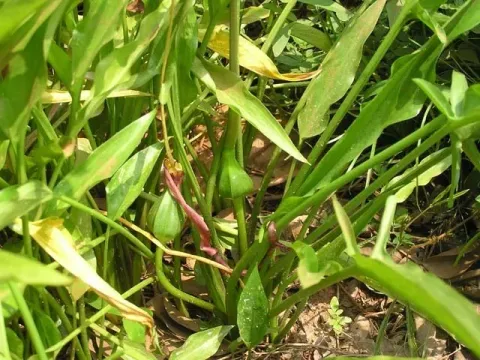
Typhonium flagelliforme
Typhonium flagelliforme
Typhonium flagelliforme is a perennial herbaceous plant belonging to the Araceae family. It is widely recognized for its medicinal properties and requires specific propagation techniques to ensure healthy growth and development within an agricultural setting.
What the section contains
Typhonium flagelliforme
Propagation is primarily achieved through the division of tubers or offsets. Planting should take place during the start of the warm season, ensuring soil temperatures remain consistently above 20°C to facilitate root establishment and avoid dormant periods caused by cold stress.
Seed propagation is possible but less common due to the complexity of germination, which requires high humidity and precise temperature control. When using seeds, they must be sown in a light, nutrient-rich substrate that prevents the settling of excessive moisture.
In commercial cultivation, greenhouse environments are preferred to provide the necessary conditions for early-stage plant vigor. Establishing strong young plants in a controlled environment before transplanting significantly increases survival rates and crop uniformity.
Optimal planting density should be determined by light exposure levels. Providing adequate space between individuals is essential to maintain proper airflow, which reduces the incidence of stagnant humidity around the foliage and potential fungal outbreaks.
This crop thrives in tropical and subtropical climates, necessitating high levels of humidity and warm temperatures throughout the growing cycle. Consistency is key, as the plant reacts poorly to sudden environmental shifts or drastic drops in ambient temperature.
The ideal temperature for active growth ranges between 22°C and 28°C. If temperatures fall below 15°C, the metabolism of the plant slows down significantly, potentially leading to stagnation. Supplemental heating may be required in temperate zones during colder months.
Soil requirements focus on high organic matter content and excellent drainage. While the plant likes moisture, it cannot tolerate waterlogged soil, which leads to immediate root rot. Using a mix of peat, perlite, and organic compost is recommended for optimal soil structure.
Light should be diffused, as direct sunlight can cause leaf scorching and increase transpiration rates beyond what the root system can replenish. Shading nets are effective tools in greenhouses to manage light intensity effectively throughout the day.
Water quality must be monitored; the plant prefers soft, room-temperature water. Frequent, moderate irrigation is superior to infrequent, heavy soakings, ensuring that the moisture levels in the root zone remain steady and optimal for nutrient uptake.
Crop yield for Typhonium flagelliforme is calculated primarily based on the mass of harvested tubers. The plant requires a substantial period of time to reach maturity, typically ranging from 7 to 10 months depending on environmental conditions and fertility inputs.
Intensive farming methods, such as fertigation, allow for higher yields by providing a balanced supply of nitrogen, phosphorus, and potassium directly to the root zone. This approach minimizes nutrient deficiencies and promotes vigorous tuber expansion.
Harvest readiness is signaled by the natural senescence of the foliage. As the leaves begin to yellow and die back, nutrients are redirected to the tuber, which maximizes the concentration of active medicinal compounds and overall biomass.
Regular soil rotation or the use of sterile containerized substrates is crucial for maintaining yield across successive seasons. Preventing the build-up of soil-borne pathogens is the most effective way to ensure stable productivity year after year.
Post-harvest handling is just as important as cultivation practices. The quality of the final product depends on how quickly and efficiently the tubers are cleaned and processed to maintain their chemical integrity after being removed from the ground.
Root rot, often caused by Pythium and other moisture-loving fungi, remains the primary threat to this crop. Over-irrigation, especially during cloudy or cool periods, significantly increases the risk of plant death due to these pathogens.
Pests such as spider mites and mealybugs frequently target the plant in protected cultivation environments where air movement might be restricted. Early detection through regular monitoring and the use of insecticidal soaps can prevent infestations from spreading.
Bacterial diseases can quickly destroy a batch if infected tools are used for cultivation or pruning. Maintaining high sanitary standards and disinfecting tools between sections of the field are essential practices for any serious producer.
Nematodes pose a threat to the subterranean parts of the plant, often causing stunting and yellowing of the leaves. Soil testing and the use of certified disease-free planting material are critical steps in preventing these persistent soil pests.
- Use sterile growth media to prevent initial pathogen colonization.
- Apply biological control agents for preventative pest management.
- Remove any decaying or suspicious material immediately.
Harvesting Typhonium flagelliforme must be done with extreme care. The tubers are delicate and prone to physical damage, which can lead to post-harvest decay if not handled gently during the extraction process.
Tools like garden forks or manual spades should be used to loosen the soil before the tubers are lifted by hand. This avoids cutting or bruising the skin of the tubers, keeping the product in premium condition for pharmaceutical processing.
Once lifted, tubers must be cleaned of excess soil and debris. Washing should be done quickly, followed by immediate air-drying in a shaded, ventilated area to remove surface moisture and prevent the growth of storage molds.
The drying phase is a critical step for chemical stability. For the highest quality, tubers should be sliced and dried at temperatures not exceeding 45°C. This gentle heat preserves the heat-sensitive compounds that define the crop's medicinal value.
Storage requires cool, dry, and dark conditions. The dried product should be stored in breathable containers to prevent condensation and fungal growth, ensuring that the medicinal potency is maintained until the product is ready for use or market distribution.