
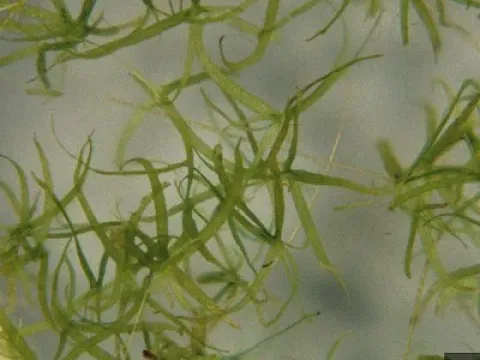
Wolffia
Wolffiella
Wolffia is propagated vegetatively by introducing fresh thalli into a nutrient-rich water environment. The initial stocking density is crucial, as it must be sufficient to establish a rapid colonial growth pattern without leading to immediate overcrowding.
What the section contains


Wolffia
Optimal growth occurs during the warm season when water temperatures are consistently above 20°C. In controlled environments, such as greenhouses, lighting and temperature can be maintained to ensure year-round production of this fast-growing aquatic plant.
The culture process involves placing the Wolffia on the surface of still water where it can access sunlight and dissolved nutrients. Since the plant lacks roots, it floats freely, and care must be taken to prevent it from being pushed to the edges by wind or currents.
Establishing a stable population requires monitoring the nutrient levels in the water to ensure a steady supply of nitrogen, phosphorus, and potassium. As the plants multiply, the surface of the water becomes covered, and density should be managed to avoid competition for space.
Large-scale production systems often use partitioned ponds or specialized raceways that allow for efficient circulation and harvesting. Maintaining the purity of the starter culture is essential to prevent contamination with other aquatic weeds or pathogens.
Wolffia belongs to the Araceae family and is recognized as the world's smallest flowering plant. It consists of simple, green, flattened thalli that grow on the surface of freshwater bodies, requiring specific environmental conditions to thrive.
The culture requires water with high nutrient content, making it an excellent candidate for wastewater treatment and aquaculture integration. Neutral to slightly alkaline pH levels are generally preferred to facilitate efficient nutrient uptake from the water column.
Temperature is the primary driver of growth, with the ideal range being between 25°C and 30°C. Extreme cold can induce dormancy or lead to the death of the plant, whereas high temperatures necessitate careful management of water oxygenation levels to prevent decay.
Sufficient light intensity is necessary for photosynthesis, yet it must be balanced to avoid overheating the surface water. In regions with varying light availability, supplemental LED lighting is often employed to maintain consistent yield rates throughout the growing season.
Water quality must be monitored rigorously, as Wolffia is sensitive to heavy metals and pollutants. A clean environment ensures not only the health of the plant but also the safety of the biomass when it is used as animal or fish feed.
Wolffia is renowned for its rapid biomass accumulation, often doubling its population in a matter of days under ideal conditions. This high productivity makes it a significant source of plant-based protein for livestock and fish farming.
The yield potential is directly proportional to the available nutrients in the water and the efficiency of the harvesting system. Advanced hydroponic facilities can maximize production by providing precise nutrient concentrations and preventing nutrient depletion.
Harvesting is typically performed using mesh screens or conveyor belts that skim the surface of the water to collect the mature plants. After extraction, the biomass is rinsed to remove impurities before being processed for fresh feeding or dehydration.
Maintaining a healthy population density is key to sustained yield; if the mat becomes too thick, the lower layers may receive insufficient light and begin to decompose. Regular harvesting helps rejuvenate the culture and stimulates further growth.
As a sustainable alternative to conventional protein sources, Wolffia provides a balanced profile of amino acids, vitamins, and minerals. High yield rates combined with low resource requirements make it a highly efficient crop for modern agricultural practices.
Fungal and bacterial infections are the most common threats to Wolffia, particularly in overcrowded systems where water circulation is poor. Symptoms often include a loss of the vibrant green color and the appearance of necrotic, brown spots on the thalli.
Insects and certain aquatic larvae can feed on the tender thalli, causing significant damage if not controlled. Physical barriers, such as fine mesh covers, are often used to protect the cultures from invasive insect species in open-air setups.
Competition from algae or other floating plants, such as duckweed, can quickly suppress Wolffia growth. Effective filtration and occasional manual cleaning are necessary to maintain a monoculture and ensure that the Wolffia has enough space and resources.
Chemical imbalances, such as the accumulation of ammonia or shifts in pH due to fish waste, can lead to widespread plant loss. Continuous monitoring and corrective water treatments are essential to maintaining the long-term health of the crop.
Lack of proper aeration can result in hypoxic conditions, which are lethal to the plants. Ensuring the water remains well-oxygenated through gentle circulation or aeration systems prevents the buildup of toxic gases and supports healthy plant metabolism.