
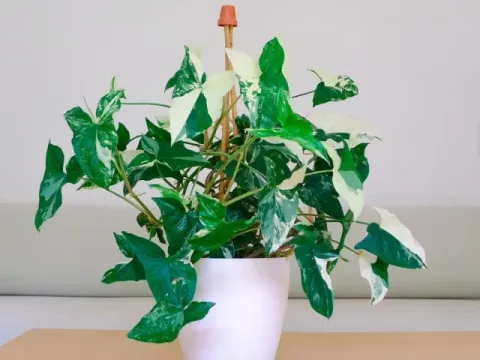
Syngonium
Syngonium
Syngonium is a genus of flowering plants in the family Araceae, native to the tropical rain forests of southern Mexico, the West Indies, and Central and South America. These perennial woody vines are highly valued for their ornamental foliage.
What the section contains


Syngonium
In terms of light, Syngonium thrives in bright, indirect sunlight. While some varieties tolerate lower light conditions, consistent bright light is necessary to maintain variegation and prevent the plant from becoming leggy and weak.
The ideal temperature range for this plant is between +18 and +24 degrees Celsius. It is a thermophilic crop that is highly sensitive to cold drafts and temperatures dropping below +15 degrees, which can severely stress the root system.
The growing medium should be well-draining, aerated, and rich in organic matter. A mixture of peat moss, pine bark, and perlite works effectively to ensure proper drainage while maintaining the moisture level needed by the plant.
Proper water management is essential for successful growth. The soil should be kept lightly moist but never waterlogged. High humidity is beneficial, so frequent misting or using a humidifier significantly increases the plant's growth rate.
Common pests affecting Syngonium include spider mites, mealybugs, and scale insects. These pests often thrive in environments with low humidity, making regular observation of the leaves crucial for early detection.
Root rot is the most common pathology, resulting from overwatering or inadequate soil drainage. It manifests as yellowing leaves and a softening of the stems at the soil line, often leading to rapid plant decline.
Fungal leaf spot can occur if the foliage remains wet for extended periods in poor air circulation. Improving ventilation around the plant is the most effective cultural method to prevent this condition from spreading.
Pest control typically involves the application of horticultural soap or systemic insecticides. Infected parts of the plant should be pruned away to reduce the pathogen load and facilitate recovery.
The plant contains calcium oxalate crystals, which are toxic if ingested and may cause skin irritation in sensitive individuals. Always handle the plant with care, especially during pruning or repotting activities.