
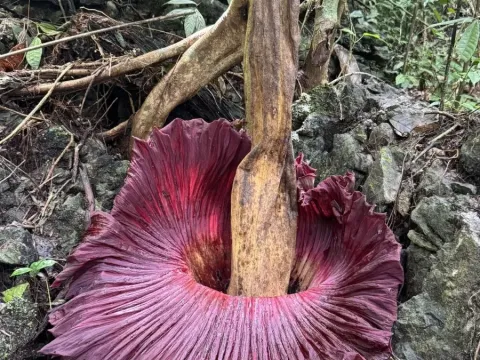
Titan arum
Amorphophallus titanum
The Titan arum (Amorphophallus titanum) is a member of the Araceae family. Native to the equatorial rainforests of Sumatra, it is renowned for its massive, pungent inflorescence and large underground corm.
What the section contains
Titan arum
Cultivating this plant requires a highly controlled tropical environment with humidity levels above 80% and daytime temperatures ranging from +25°C to +30°C to ensure proper growth of the leaf or flower.
The soil requirements are specific: it needs a very porous, well-draining potting medium rich in organic matter. A mixture of peat, perlite, and bark is typically used to prevent waterlogging, which is fatal to the corm.
Lighting should be bright but filtered. In its natural habitat, it grows in the understory, meaning it does not tolerate intense direct sunlight, which can scorch its large, spreading foliage.
Management involves a strict cycle of fertilization during the active leaf-growing phase using nitrogen-heavy fertilizers, followed by a dry resting period to allow the massive corm to replenish energy.
The most significant threat to the Titan arum is soft rot, caused by Erwinia bacteria or various soil fungi, which thrives if the corm is kept in soggy conditions without adequate drainage.
Common pests include spider mites and mealybugs, which are problematic in indoor cultivation where natural predators are absent and air movement might be restricted.
Preventative measures include maintaining high ambient humidity and ensuring excellent air circulation around the base of the plant to prevent the buildup of pathogens.
Root system health is paramount; therefore, avoiding mechanical damage to the corm during repotting is essential, as wounds serve as entry points for rot-causing microbes.
If an infection is detected, the affected tissue must be surgically removed, and the remaining healthy part of the corm treated with sulfur or systemic fungicides to prevent further decay.