
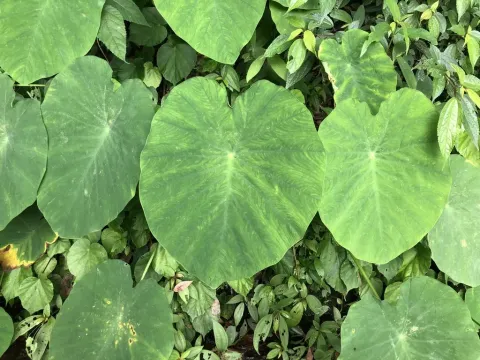
Taro
Colocasia Schott
Taro is typically propagated through vegetative means, utilizing corm pieces or suckers rather than seeds, which are rarely used in commercial cultivation. The optimal time for planting begins when soil temperatures consistently reach +18°C.
What the section contains

Taro
In regions with distinct seasons, tubers should be planted after the final frost risk has passed. Farmers often practice pre-sprouting in greenhouses to ensure an early start and faster crop establishment.
Planting spacing is critical; plants should be set 60-90 centimeters apart to accommodate the expansive leaf canopy. Tubers are generally buried at a depth of 5 to 10 centimeters, depending on the soil structure.
Thorough preparation of the planting site with organic amendments is essential, as the crop requires nutrient-rich soil to support its long vegetative cycle. Good soil preparation also facilitates easier harvesting later.
Ensuring adequate moisture from the start is paramount, and many farmers implement irrigation systems immediately after planting to avoid any transplant shock for the young corms.
Colocasia (Colocasia Schott) is a significant agricultural crop belonging to the Araceae family. Originating from Southeast Asia, it has become a staple food source for millions across the tropical and subtropical regions of the world.
The plant thrives in tropical climates with an optimal temperature range between +25°C and +30°C. Development slows significantly below +10°C, and the plant is highly sensitive to frost, which can cause total destruction of the foliage.
Taro requires well-drained but moisture-retentive soils with a slightly acidic to neutral pH. It is famously shade-tolerant and capable of surviving waterlogged conditions, making it suitable for wet cultivation zones.
Lighting requirements are moderate; while Taro prefers full sun for maximum growth, extreme heat may require light shading to prevent leaf scorch and maintain leaf turgor in younger plantings.
Effective management includes consistent soil fertility maintenance. Nitrogen is particularly important during the vegetative growth phase to ensure large, healthy leaf development, which in turn fuels corm expansion.
Yields are highly dependent on the length of the growing season, which typically ranges from 6 to 9 months. Under ideal conditions, Taro is a highly productive crop capable of generating substantial biomass for food security.
The tubers are a rich source of complex carbohydrates and dietary fiber. Beyond the tubers, the leaves are also consumed in many culinary traditions, provided they undergo proper cooking to neutralize calcium oxalate crystals.
Industrial applications include flour production, snack chips, and livestock feed. The unique properties of Taro starch are valued in various commercial applications, including food thickening and adhesive production.
Achieving high yields involves strategic application of potassium-rich fertilizers toward the latter half of the season, which stimulates the final swelling of the corms and improves nutritional quality.
Regular weed management is essential; Taro is slow to establish, and early competition from weeds can drastically reduce the final harvest weight if not controlled efficiently.
The most common and devastating disease in Taro cultivation is taro leaf blight (Phytophthora colocasiae), which can quickly defoliate entire fields under humid conditions. Integrated pest management and fungicide use are standard protocols.
Pests such as spider mites, aphids, and taro root aphids can cause significant damage. These pests are particularly problematic in dry conditions and can also transmit viral pathogens that reduce overall vitality.
Post-harvest bacterial rots can lead to significant losses in stored tubers. Maintaining hygiene during harvest and ensuring tubers are dry before storage are the best preventative measures against decay.
Root-knot nematodes can severely affect root health, leading to stunted growth. Crop rotation and using certified healthy planting material are the primary defense strategies for farmers.
Nutrient imbalances, particularly micronutrient deficiencies, can cause chlorosis. Foliar applications of chelated nutrients are often used to correct these issues rapidly during the growing season.
Harvesting begins when the foliage begins to turn yellow and decline, signaling that the plant has finished directing energy toward corm development. This stage usually occurs several months after planting.
The tubers are unearthed carefully using mechanical or manual tools, ensuring the skin remains intact. Avoiding damage is crucial, as any physical injury to the corm provides entry points for rot-causing fungi.
After removal from the soil, tubers should be cleaned and allowed to air-dry in a shaded, well-ventilated area for several days to "cure" the skin, which significantly improves shelf life.
Proper storage requires a cool, dry, and well-ventilated environment, with temperatures maintained between +10°C and +15°C. Excessive cold can damage the tuber structure, leading to breakdown.
Selection of high-quality corms for the next season is performed during the harvest process, ensuring that only healthy, disease-free planting material is retained for the following crop cycle.