
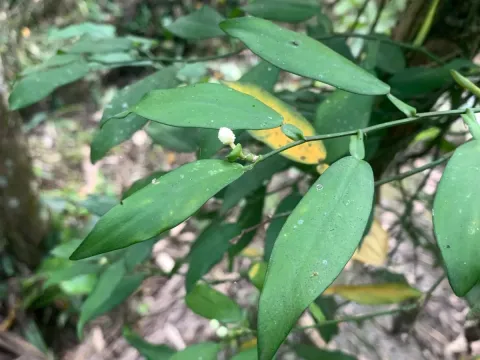
Pothos
Pothos L.
The genus Pothos (Pothos L.) comprises a group of evergreen climbing plants within the Araceae family. Originating from the tropical regions of Southeast Asia, Madagascar, and the Pacific Islands, these plants have evolved as epiphytes in dense rainforest ecosystems.
What the section contains
Pothos
Cultivation of Pothos requires a controlled environment that mimics its natural habitat. The ideal temperature range is between 18 and 25 degrees Celsius, with protection against cold drafts and extreme thermal fluctuations which can lead to leaf senescence.
Soil requirements are centered on high aeration and moisture retention without stagnation. A mixture containing organic peat, perlite, and coarse bark is ideal for maintaining the structure necessary for root health.
Light exposure should be moderate and indirect. While the plant exhibits high shade tolerance, prolonged exposure to direct sunlight can severely damage the photosynthetic apparatus and decrease the aesthetic quality of the foliage.
In terms of agricultural utility, Pothos is primarily grown as an ornamental foliage crop. Its biological resilience and adaptability make it a staple in indoor landscaping and commercial greenhouse production systems.
Common pests affecting Pothos crops include spider mites, mealybugs, and scale insects, which often thrive in indoor environments with low atmospheric humidity.
Pathological threats are primarily fungal, with root rot (Phytophthora spp. or Pythium spp.) being the most prevalent issue caused by overwatering or poor drainage.
Integrated pest management strategies involve maintaining optimal humidity levels and ensuring good air circulation around the plants to prevent the colonization of pests and pathogens.
Chemical control measures using systemic insecticides should be employed cautiously, ensuring the products are registered for indoor use and applied according to dosage guidelines.
Cultural control, such as the removal of dead leaves and the sterilization of pruning tools, is essential for maintaining the overall phytosanitary status of the crop.