
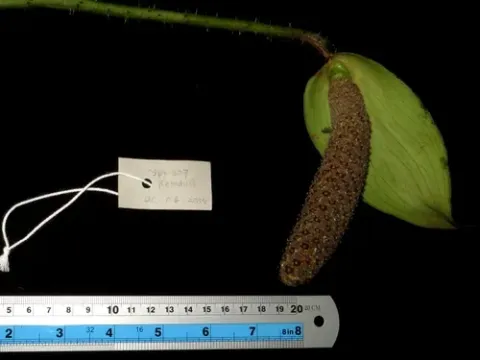
Podolasia
Podolasia
Podolasia is a distinct monotypic genus within the Araceae family, native to the tropical rainforests of Southeast Asia, including regions in Malaysia and Indonesia. As a shade-loving herbaceous perennial, it thrives in the understory of dense forests where moisture is abundant and temperatures remain constant.
What the section contains

Podolasia
The morphology of Podolasia includes a sturdy rhizome and foliage that typically exhibits the sagittate or hastate shape characteristic of many aroids. The plant is evolved to cope with high humidity levels, making it highly dependent on consistent atmospheric moisture for healthy development of its leaf blades.
Regarding soil requirements, Podolasia demands a substrate that is rich in organic matter, porous, and well-draining. While it favors swampy conditions in the wild, cultivation in containers or greenhouses necessitates excellent drainage to prevent root rot, which is a common failure point for amateur growers.
Environmental conditions must mimic the tropical climate of its origin. Temperatures should ideally range between 22 and 28 degrees Celsius throughout the year. Any significant deviation, particularly exposure to cold drafts or temperatures below 15 degrees Celsius, can induce dormancy or irreversible physiological stress.
Successful management of this crop involves filtered light conditions. Direct, high-intensity sunlight can cause severe leaf scorch and dehydration. A greenhouse setup with misting systems or controlled irrigation is often required to replicate the native environment effectively for growth cycles.
Pathogenic threats for Podolasia primarily involve fungal pathogens like Pythium and Phytophthora, which attack the underground rhizome if soil drainage is compromised. Prevention relies on sterile growing media and strict adherence to irrigation schedules.
Insects like mealybugs and spider mites represent the most common pest pressure. Because of the delicate nature of the foliage, mechanical removal and biological control methods are preferred over harsh chemical pesticides, which may damage the plant's surface tissues.