
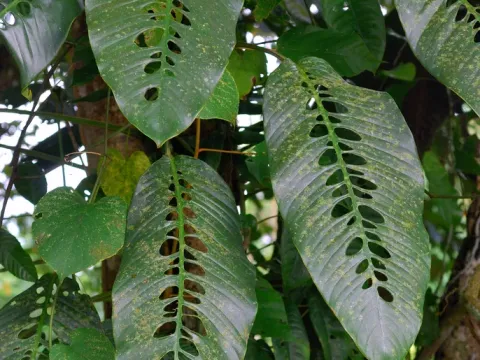
Rhaphidophora
Rhaphidophora Hassk.
Rhaphidophora is a genus of flowering plants in the Araceae family, native to tropical forests ranging from Africa to the western Pacific islands and Australia.
What the section contains


Rhaphidophora
These plants are primarily hemiepiphytes that require warm, stable environmental conditions with temperatures generally remaining above 18 degrees Celsius throughout the year.
High relative humidity is essential for the healthy development of Rhaphidophora, mimicking their natural rainforest habitat where moisture levels are consistently elevated.
The substrate must be light, porous, and nutrient-rich, often consisting of a mix of bark, perlite, and peat to ensure excellent drainage and root aeration.
Bright, indirect light is preferred for most species, as direct sunlight can easily scorch the large foliage, leading to dehydration and necrosis of leaf tissues.
Common pests include spider mites, which thrive in low-humidity environments, and mealybugs, which often hide in the crevices of the stems and leaf nodes.
Root rot remains the most critical threat to Rhaphidophora, usually triggered by waterlogged soil conditions that prevent oxygen from reaching the roots.
Fungal leaf spots can occur when the foliage remains wet for extended periods in environments with poor air circulation, necessitating better ventilation protocols.
Integrated pest management, including regular physical inspection and the application of horticultural oils, is highly recommended to keep infestations at bay.
To prevent disease spread, it is crucial to isolate affected specimens immediately and apply appropriate systemic fungicides to save the plant structure.