
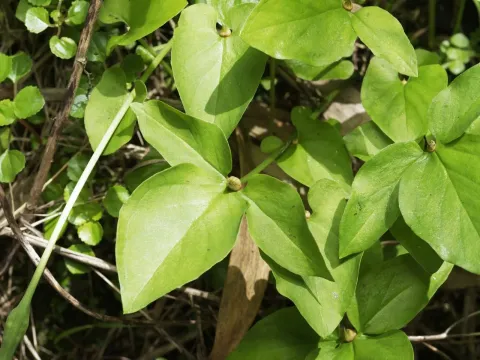
Pinellia
Pinellia
Sowing of Pinellia (Pinellia ternata) is most commonly performed using vegetative methods, specifically through the daughter tubers that form at the base of the parent plant. The optimal time for planting is early spring, once the soil has warmed to 10-12 degrees Celsius.
What the section contains


Pinellia
When propagating by seed, the seeds are sown into a prepared substrate immediately after harvesting. Pinellia seeds require stratification to improve germination rates, which makes late autumn sowing in protected ground a preferred method for ensuring uniform seedling emergence.
Planting density depends directly on soil type and cultivation objectives, with a standard recommended spacing of 20 by 30 centimeters. Tubers should be planted at a depth of 5 to 8 centimeters to prevent desiccation during the early stages of the growing season.
Preparation of planting material is a crucial stage: tubers must be healthy, free of mechanical damage, and show no signs of rot. Before planting, it is recommended to perform a brief disinfection in fungicide solutions to protect against soil-borne pathogens.
The irrigation system after sowing should be moderate but consistent. Pinellia is sensitive to waterlogging in the early growth stages, making proper field drainage a critical condition for the successful establishment of the crop.
Pinellia is a member of the Araceae family and originates from the temperate and subtropical climates of East Asia. It prefers partially shaded areas with loose, humus-rich, and well-drained soil.
The crop has high requirements for substrate moisture; however, it strictly avoids water stagnation, which leads to rapid decay of the root system. An ideal soil pH is within the slightly acidic to neutral range.
The optimal temperature range for plant development is between 18 and 25 degrees Celsius. At temperatures above 30 degrees, the growth of aerial parts may slow down, and in drought conditions, the plant often enters a state of premature dormancy.
For intensive cultivation, it is necessary to provide protection from direct midday sun, which can cause leaf burns. In industrial settings, shading nets are often used to create conditions of diffused light.
Fertilization should be balanced, with an emphasis on organic components. Excess nitrogen fertilizer promotes excessive green mass at the expense of tuber quality and size, which are the main economically valuable products.
The yield of Pinellia is determined by the mass of accumulated tubers, which are harvested after the complete senescence of the aerial parts. Under favorable conditions, the yield can reach up to 3-5 tons of dry raw material per hectare.
Total output depends on plantation age and agronomic measures such as weeding and hilling. Increasing tuber size is achieved by removing inflorescences during the first year of vegetation, which allows nutrients to be redirected to the root system.
Crop quality is assessed based on the density and size of the tubers, which must be cleaned of soil and dried to a specific moisture level. Proper drying preserves the biologically active compounds valued in the pharmaceutical industry.
Sorting collected raw material involves removing small or damaged tubers, which may be repurposed as planting stock for the next season. Standardizing size is an important requirement for market realization.
Yield stability depends largely on weed control, as weeds compete heavily with Pinellia for water and nutrients. Regular inter-row cultivation promotes better soil aeration and supports root system development.
The main threat to Pinellia plantations is fungal disease, such as root rot and Fusarium wilt, which develop under high moisture conditions. Infestation usually begins with the yellowing of leaves and leads to the total destruction of the underground parts.
Among pests, the greatest danger comes from soil-dwelling insect larvae, particularly wireworms and cutworms, which damage the tubers. These pests can significantly reduce plant stand density in the field.
Aphids and spider mites may attack the aerial parts of the plant during dry spells. The use of specialized acaricides and insecticides must follow strict regulations, considering the environmental requirements for medicinal raw materials.
Nematodes are also a serious threat, attacking the root system and causing gall formation. Controlling them is complicated because the pathogens persist in the soil for long periods, requiring strict crop rotation.
To prevent the spread of diseases and pests, it is vital to maintain spatial isolation and perform timely disinfection of equipment. Using healthy, certified planting material remains the primary preventive measure for protection.
Harvesting Pinellia begins in the autumn when the leaves of the plant have completely withered and nutrients have translocated into the tubers. During this time, the root system reaches its peak accumulation of active compounds needed for processing.
The process of tuber extraction should be performed carefully to avoid mechanical damage that lowers raw material quality. Usually, specialized diggers adjusted for shallow root crop harvesting are used.
After excavation, tubers are thoroughly cleaned of soil remnants and washed with running water. It is essential to perform the cleaning process quickly to avoid the onset of fermentation or decay caused by high moisture content in the raw material.
Subsequent drying is carried out in well-ventilated areas or specialized drying chambers under controlled temperatures. Overheating is unacceptable as it destroys the biologically active substances for which the crop is cultivated.
Finished dry material is packed in paper bags or specialized containers that provide protection against moisture and pests. Storage must take place in a dry, dark, and cool place to maintain the shelf life of the product.