
Dieffenbachia seguine
Dieffenbachia seguine (Jacq.) Schott
Description
Growing requirements
Dieffenbachia seguine is a prominent member of the Araceae family, originating from the tropical regions of the Americas. This perennial herb is widely utilized in the horticultural industry due to its striking variegated foliage and its ability to thrive in controlled indoor environments.
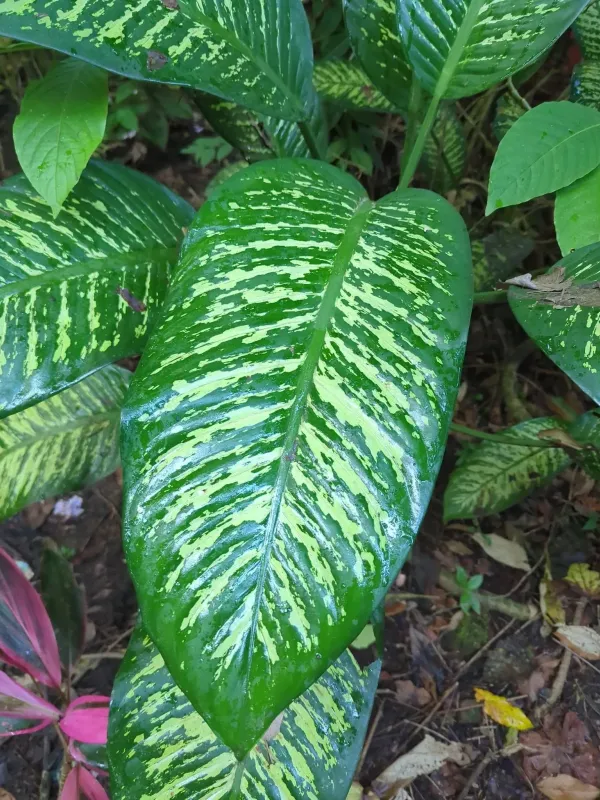
The plant features thick, succulent stems that support large, broad, elliptical leaves often marked with cream-colored spots. These botanical characteristics serve as a survival mechanism in the dense, low-light understory of rainforests, maximizing light absorption efficiency.
Agricultural requirements focus on maintaining high humidity and a consistent temperature range, preferably between 21 and 26 degrees Celsius. Exposure to cold drafts or temperatures below 15 degrees Celsius can cause significant physiological stress and lead to foliage drop.
Soil management necessitates a well-draining, peat-based growing medium with an acidic to neutral pH. Proper aeration is crucial to prevent the suffocating of roots; thus, incorporating elements like perlite or wood bark into the potting mix is highly recommended for optimal development.
Cultivation practices involve regular irrigation, ensuring the top layer of the soil dries slightly between waterings. Fertilization should be conducted during the active growth phase using a balanced NPK formulation to support the development of the lush, decorative leaves.
Main diseases and pests
Spider mites represent a major threat to Dieffenbachia, particularly in greenhouse settings where air moisture is difficult to control. These pests thrive in dry conditions, puncturing leaf cells and causing characteristic stippling that ruins the plant's aesthetic and vitality.
Mealybugs are another common pest that congregate in the leaf axils, creating a protective waxy substance that shields them from standard treatment. Integrated pest management using systemic insecticides is often required to effectively control these populations.
Root rot, driven by Phytophthora or Pythium species, is a lethal disease resulting from poor drainage or excessive watering. The primary control strategy involves improving soil structure and applying biological or chemical fungicides at the first sign of wilting.
Bacterial leaf spot can manifest as dark, water-soaked lesions, often spreading rapidly if humidity is excessively high and airflow is stagnant. Providing adequate ventilation and avoiding overhead irrigation are critical steps to prevent the spread of bacterial pathogens.
Strict sanitation protocols must be observed, including the disinfection of pruning equipment and the removal of infected plant debris. These measures, combined with regular monitoring, are essential for maintaining the health and market value of the crop in any professional operation.