
Dieffenbachia daguensis
Dieffenbachia daguensis Engl.
Description
Growing requirements
Dieffenbachia daguensis is a species belonging to the Araceae family. This perennial herbaceous plant is native to the tropical rainforests of South America, specifically found in Colombia.
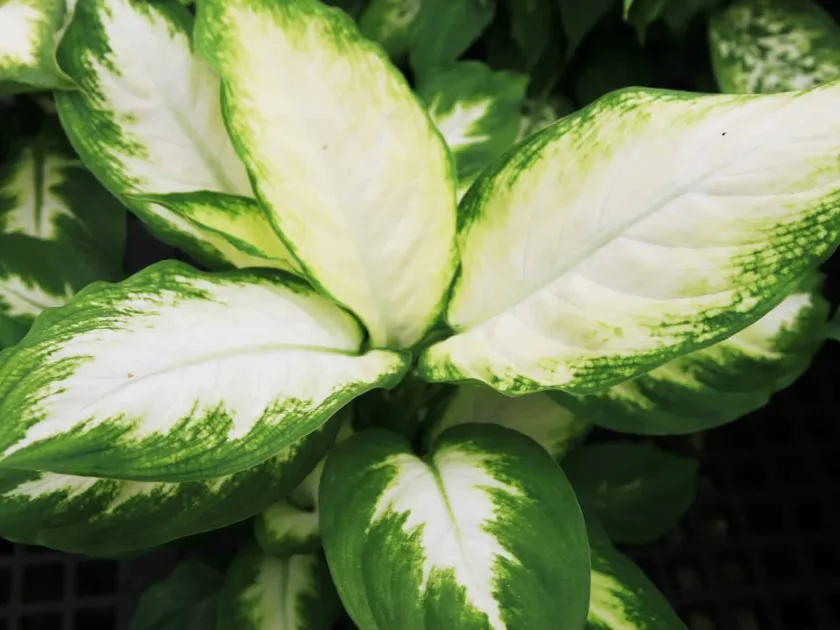
The plant is characterized by its broad, lanceolate foliage and structural, upright stem. In its natural habitat, it thrives under the canopy of larger trees, which dictates its preference for bright, filtered light in cultivation.
Requirements for successful growth include a warm, humid environment. Temperatures should ideally range between 20°C and 25°C. Exposure to direct sunlight should be avoided to prevent leaf scorch and dehydration of the plant tissues.
The soil substrate must be porous, well-draining, and rich in organic matter. A mixture of peat, perlite, and coarse bark is recommended to ensure that oxygen reaches the root system and prevents waterlogging.
Regular maintenance involves checking the moisture content of the growing medium. Watering should be consistent, allowing the top layer of soil to dry out slightly before the next application to keep the roots healthy.
Main diseases and pests
The primary threats to Dieffenbachia daguensis are related to poor cultural practices. Overwatering is the most common cause of root rot, which is often fatal if not diagnosed and corrected early.
Bacterial leaf spot is a prevalent disease in high-humidity environments with poor air circulation. It manifests as dark, water-soaked spots that can rapidly spread across the entire leaf surface if not controlled.
Pests such as spider mites, aphids, and mealybugs frequently target this species. Spider mites thrive in dry conditions and can cause significant damage by piercing the plant's cell walls for nutrition.
Mealybugs tend to accumulate in the leaf axils, making them difficult to detect. Regular inspection and wiping of leaves with an insecticidal soap or neem oil solution can keep these populations in check.
Maintaining proper hygiene by removing dead foliage and ensuring sufficient airflow around the plant is essential to prevent the establishment of both fungal and insect infestations.