
Dieffenbachia seguine
Dieffenbachia seguine (Jacq.) Schott var. seguine
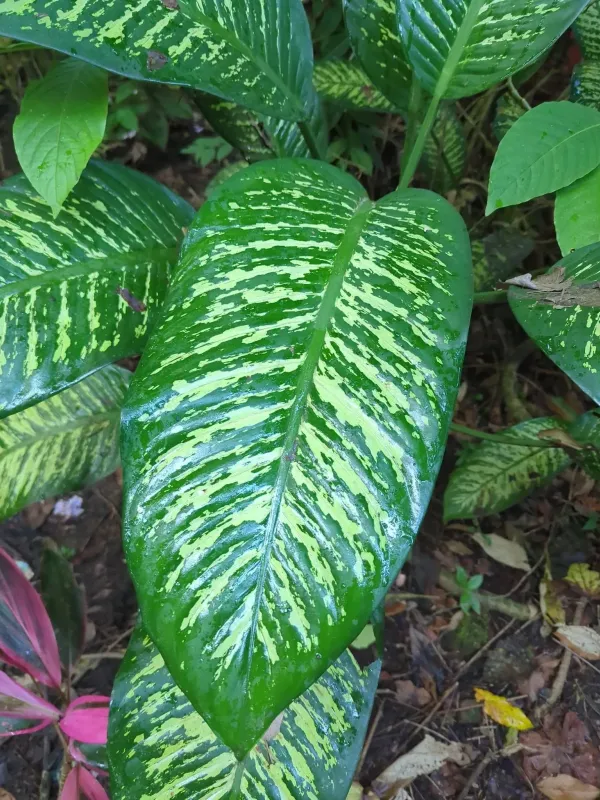
Description
Growing requirements
Dieffenbachia seguine is a perennial herbaceous plant belonging to the Araceae family. Originating from the tropical regions of Central and South America, it has adapted to humid environments with dense canopy cover, which defines its preference for filtered light and high humidity.
The crop thrives in temperatures ranging between 20°C and 25°C. Agricultural management requires avoiding cold drafts and drastic temperature fluctuations, which can trigger physiological stress and leaf abscission in this tropical species.
Regarding light, it requires bright, indirect illumination. Direct sun exposure typically leads to phototoxicity, manifested as scorched leaf spots, while extremely low light intensity will result in the loss of variegation and leggy growth due to etiolation.
The substrate must be well-draining, porous, and nutrient-rich. A mix of peat, pine bark, and perlite is ideal for maintaining the necessary pH level between 5.5 and 6.0, ensuring that root respiration is not hindered by waterlogging.
Water management is critical; the soil should be kept consistently moist but never waterlogged. During winter dormancy, irrigation frequency should be reduced significantly, allowing the upper substrate layer to dry out to prevent root development issues.
Main diseases and pests
Common pests affecting Dieffenbachia seguine include spider mites (Tetranychidae), which thrive in environments with low relative humidity. Thrips and mealybugs also pose significant threats by causing deformation of the emerging leaf tissues.
Pathogenic threats are primarily fungal in nature, with root rot being the most prevalent issue. This is usually caused by species of Phytophthora or Pythium, which proliferate rapidly in poorly ventilated, overly moist soil conditions.
Leaf spot diseases, often caused by bacterial pathogens such as Erwinia, are characterized by watery, dark lesions. These lesions often expand rapidly under high temperature and humidity, potentially leading to the death of the plant if not addressed.
Integrated pest management strategies should include regular inspection of the leaf underside and the application of appropriate acaricides or insecticides when infestation thresholds are exceeded. Keeping the foliage clean helps improve transpiration and plant vitality.
It is important to acknowledge the plant's chemical defense mechanism involving calcium oxalate crystals. These crystalline structures serve to deter herbivores and can cause physical irritation to human skin and mucous membranes during handling.